
Summary:
- Mechanical Blocks: Rotors & Pistons
- Weapons & Combat Basics
- Area Welding, Production Lines
- Moons, Asteroid Rings & Clusters
- Planetary Events, Weather
- Trading, Economy Foundations
- Customizable Controls
- …and much, much more!

Hello, Engineers!
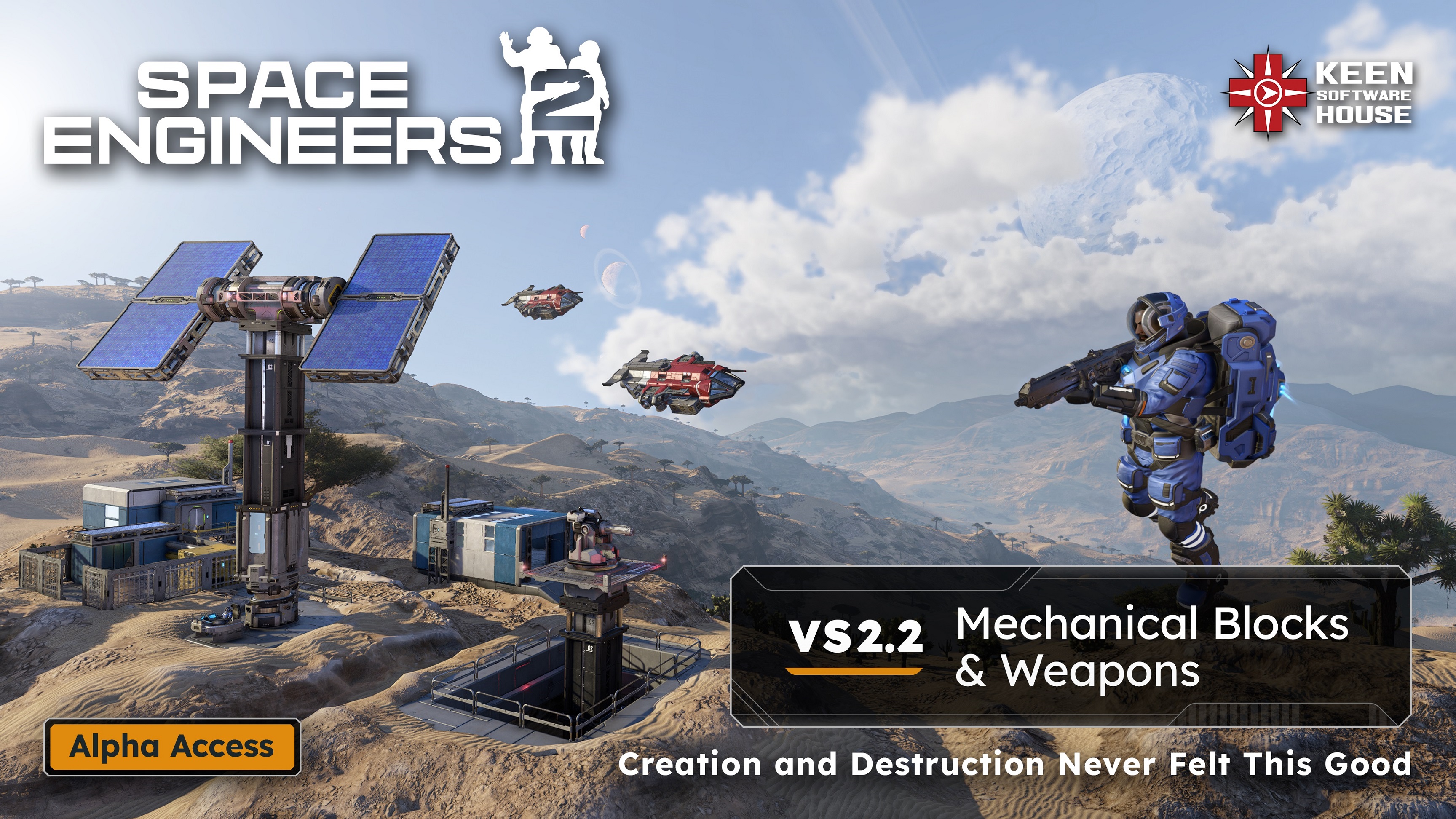
Major Update VS2.2 is here – bringing Mechanical Blocks (Rotors & Pistons), Weapons & Combat Basics, Area Welding, and Production Lines to the game.
This update also expands exploration with new Moons, Asteroid Rings, and Clusters, while introducing Planetary Events and Weather, Trading & Economy foundations, and Customizable Controls. Together, these systems deepen the survival experience and expand gameplay possibilities.

This Major Update pushes Space Engineers 2 forward in a big way – and we’re excited to finally share it with you!

Let’s take a look at what’s new in VS2.2.

We have expanded the Almagest System with new locations to discover and new regions to explore. Moons, asteroid rings and dense clusters now add more depth and variety, encouraging you to travel farther and establish your presence beyond familiar space.
Important:
Some features introduced in VS2.2 require starting a new game to appear correctly – including Moons, Asteroid Rings and Clusters, Cargo Ships, Trading/Economy systems, and the new loot system.
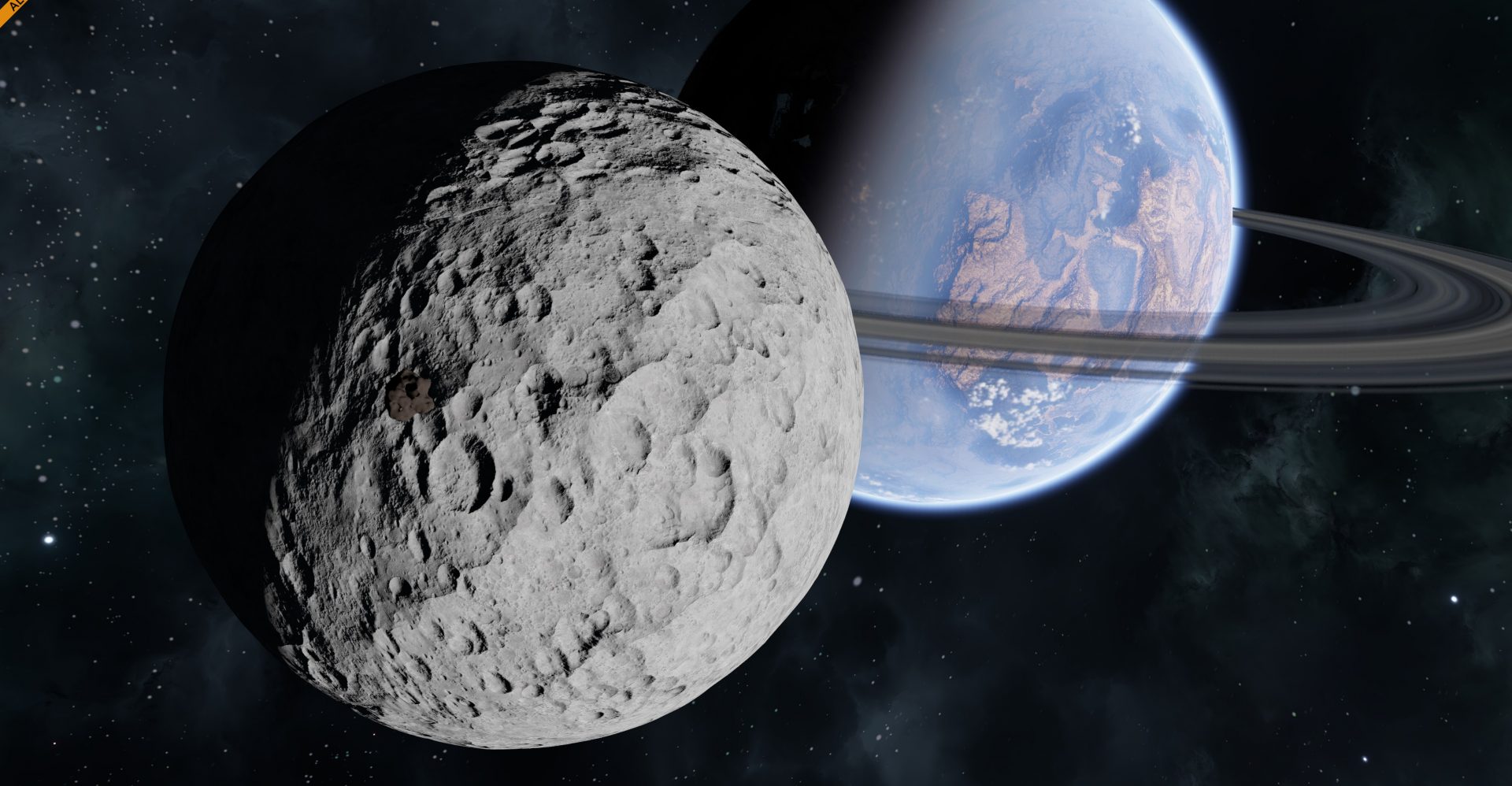
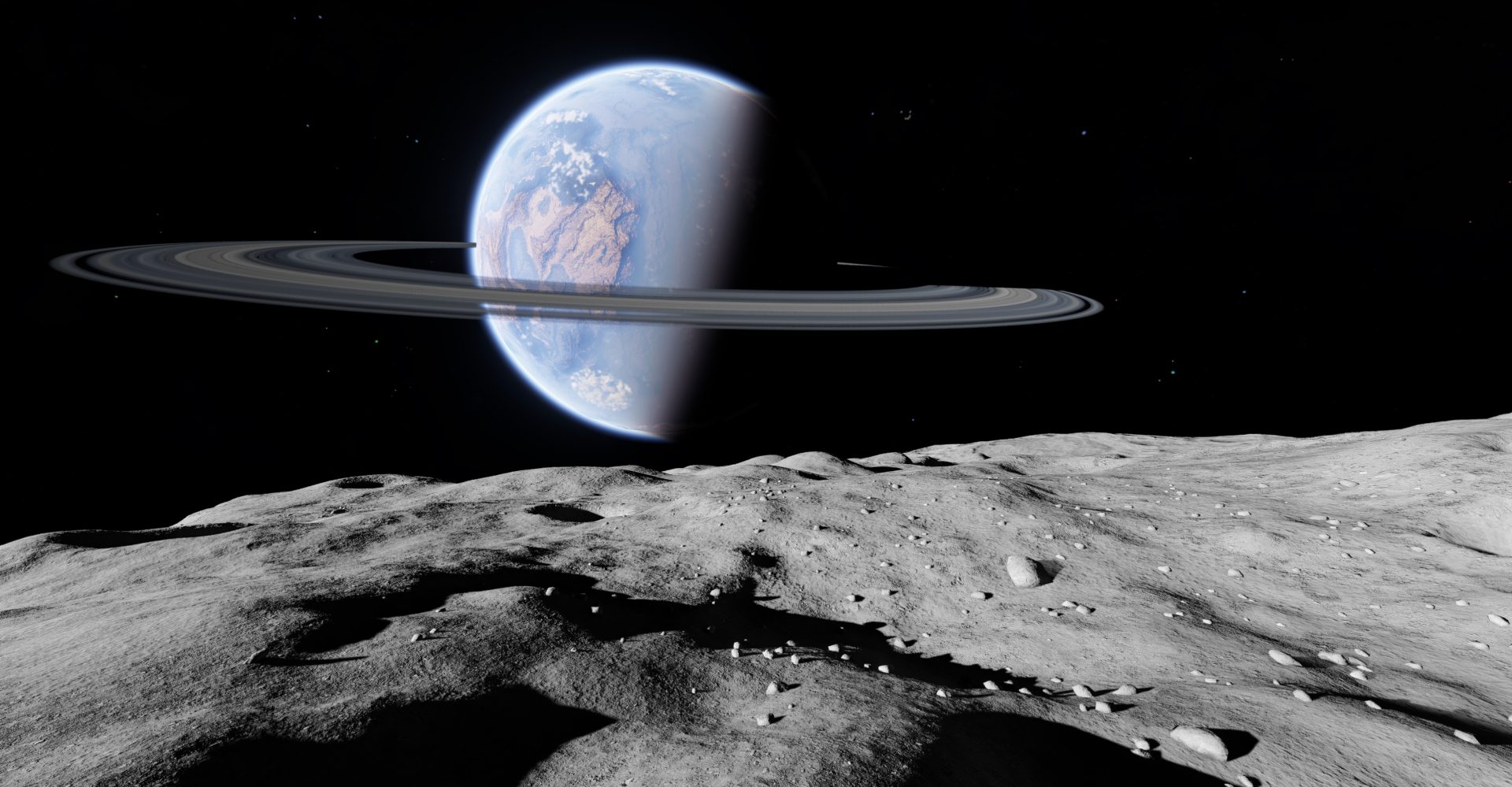
Moon Palatine
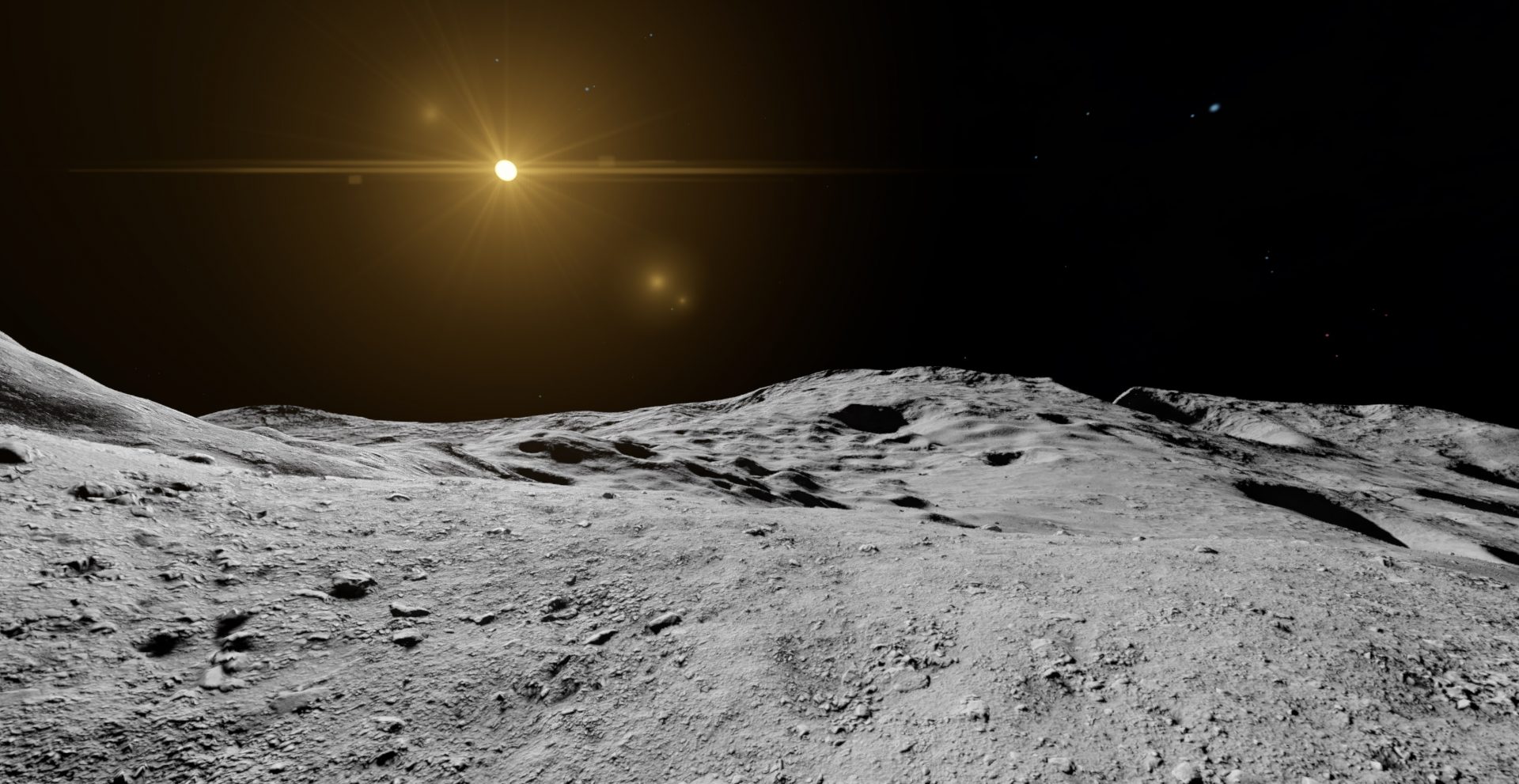
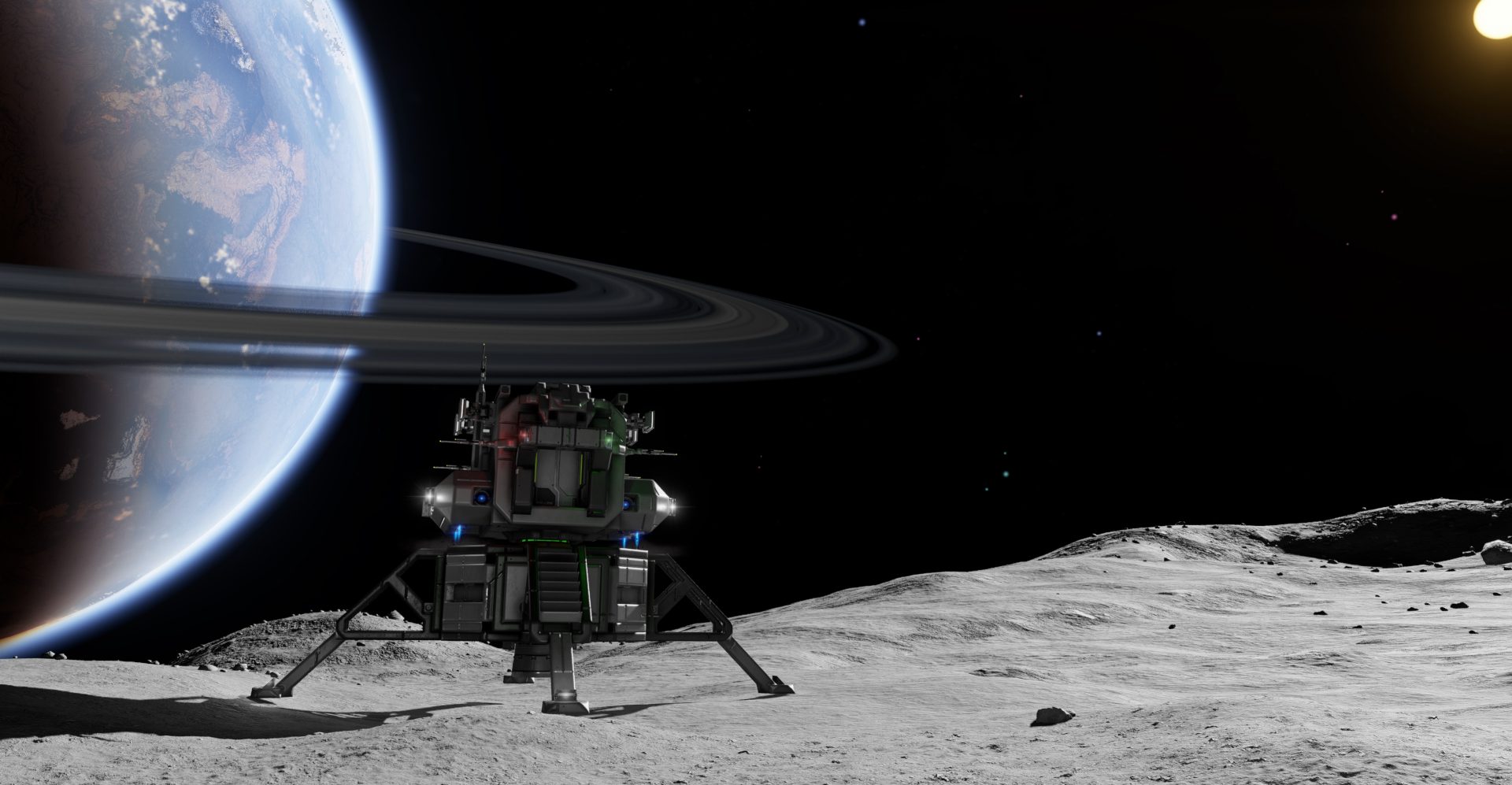
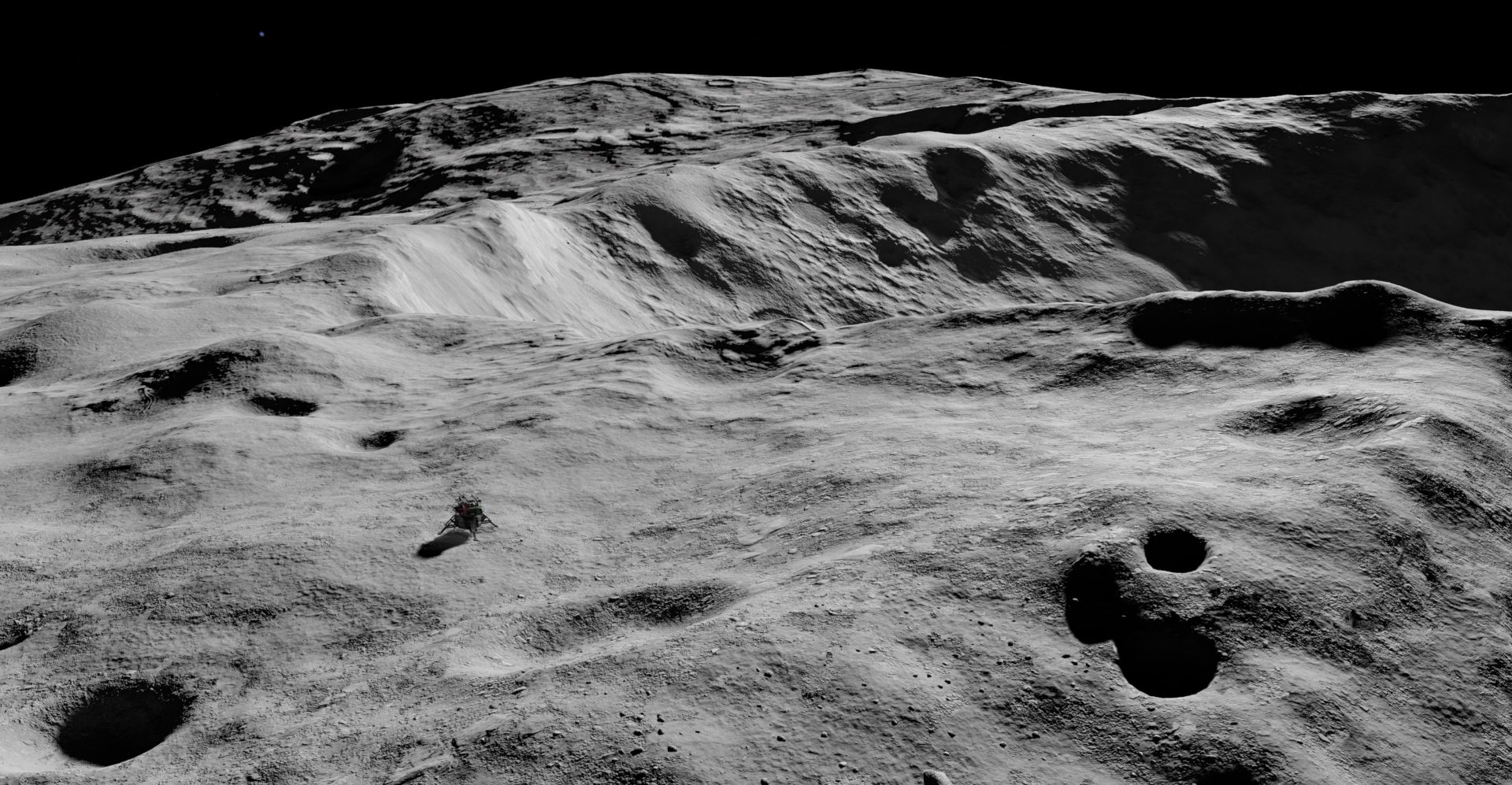
Palatine (ILS-93b-I) is Verdure’s natural satellite, a stark, airless world marked by ancient impacts and vast regolith plains. With surface gravity at approximately 0.33g, its cratered surface and fractured highlands echo the familiar silhouette of Earth’s Moon, bringing a sense of recognition to the distant Almagest system.
From Verdure, Palatine dominates the sky – a constant presence above the horizon. Up close, it reveals a harsh vacuum environment of dust, exposed rock, and sharp contrast between light and shadow. Silent and unforgiving, it offers new opportunities for engineers ready to build where there is no atmosphere to protect them.
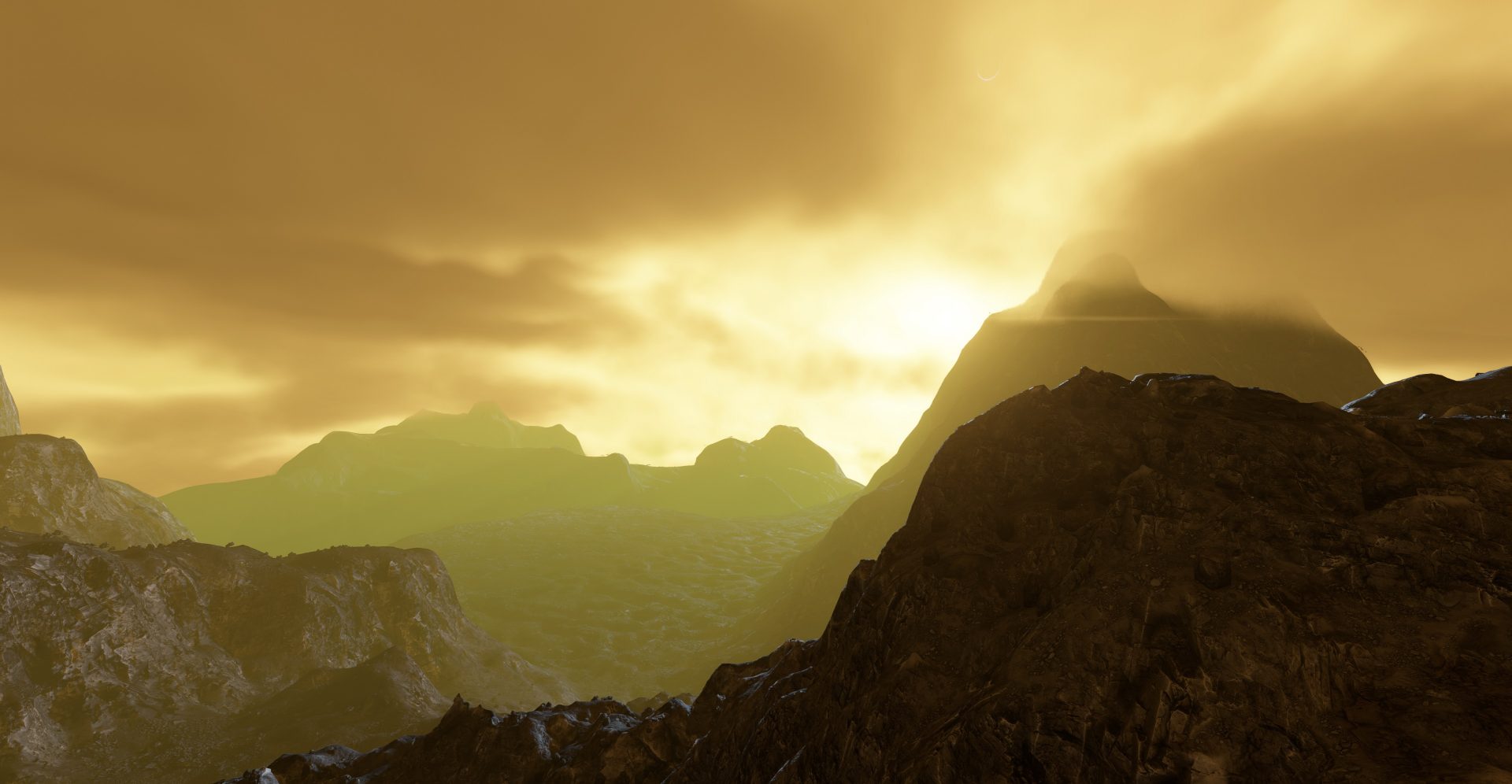
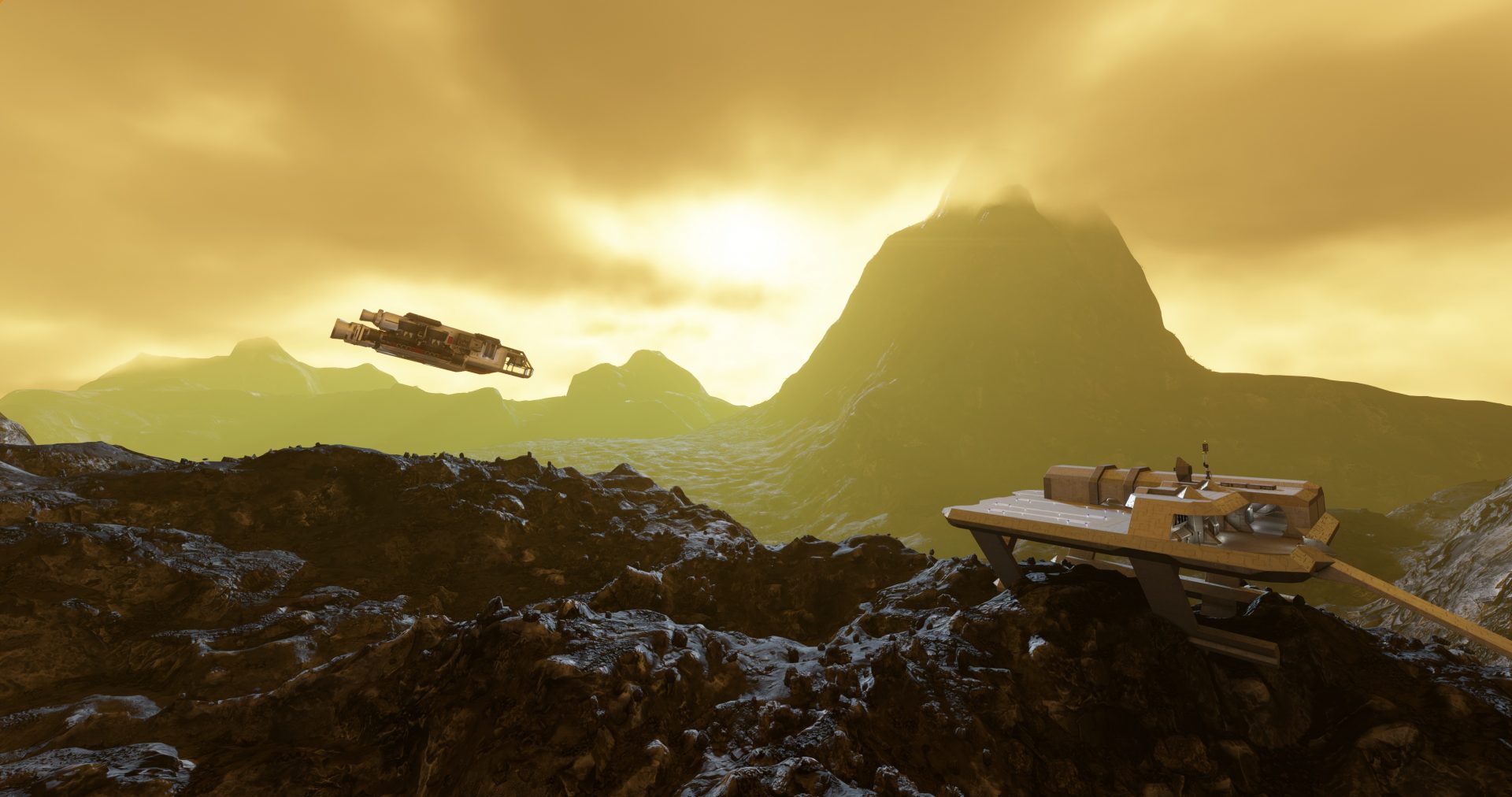
Moon Caligo
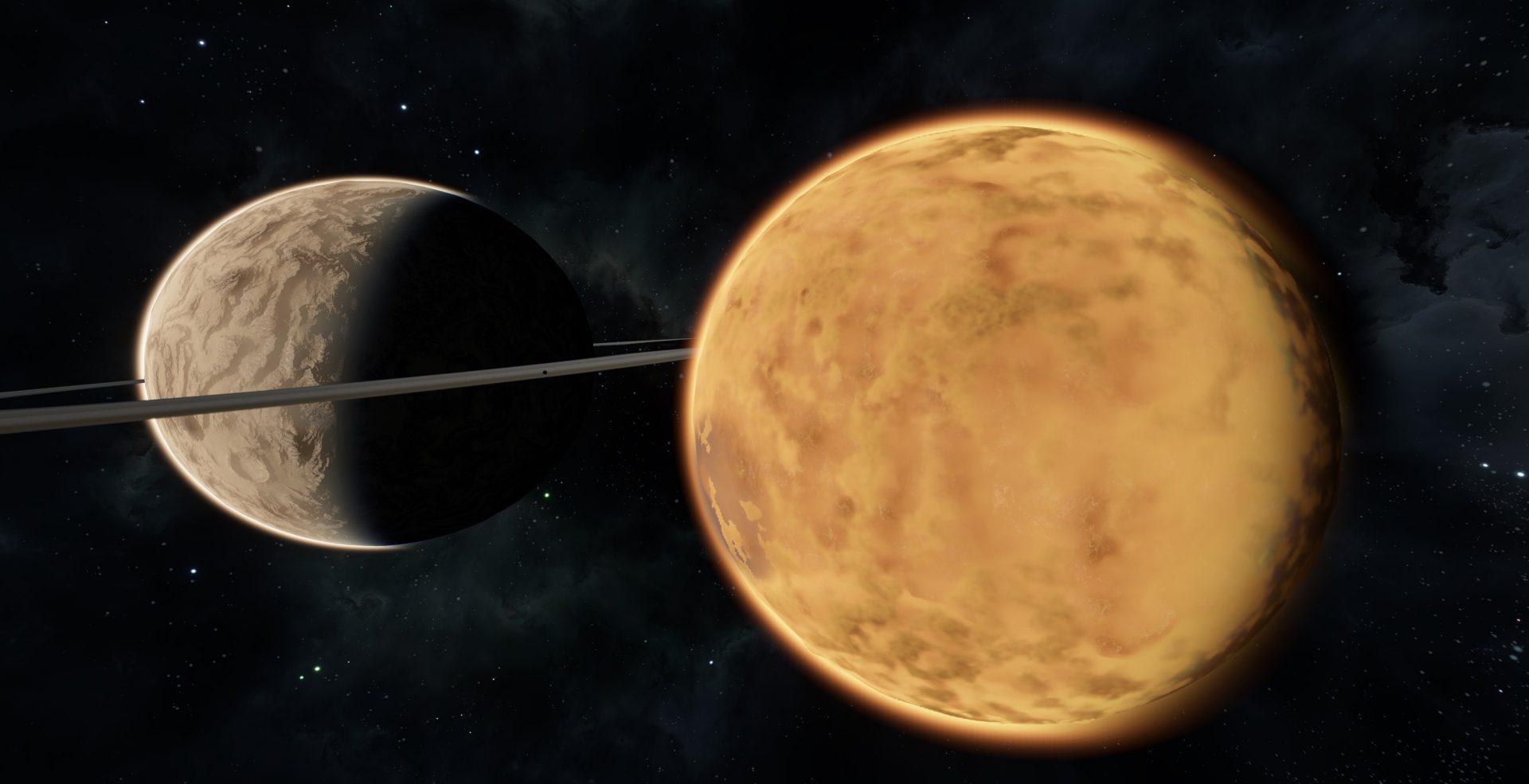
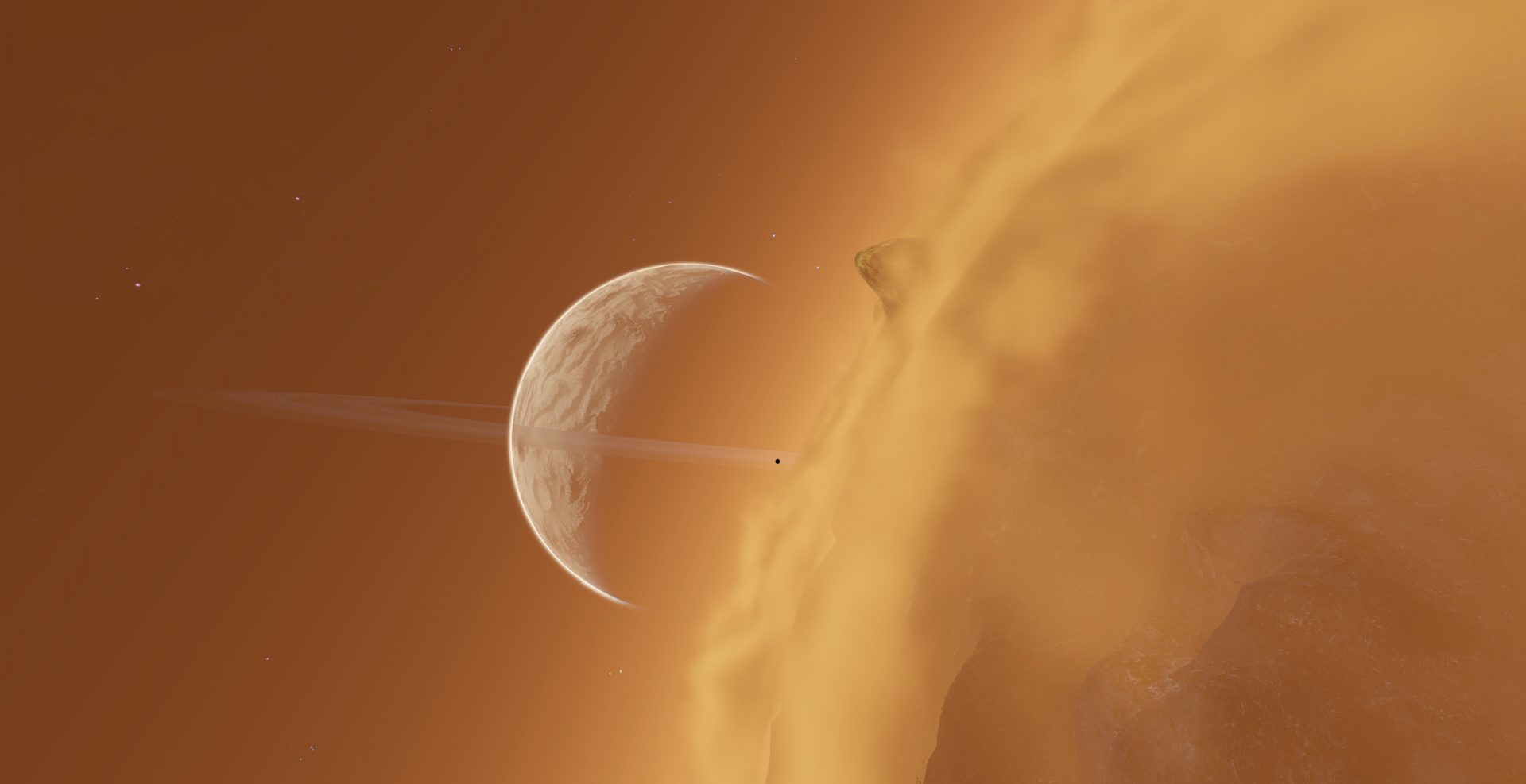
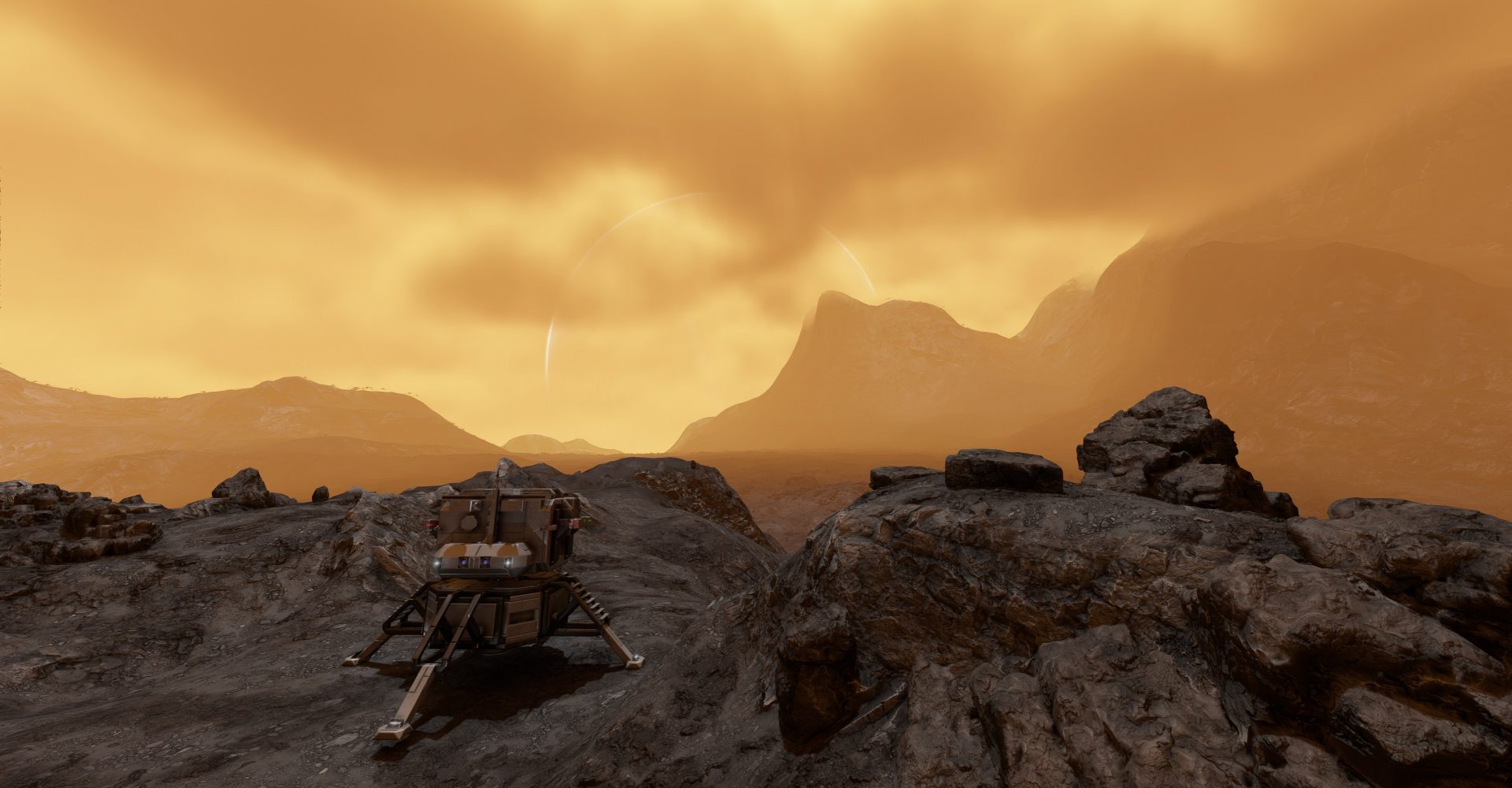
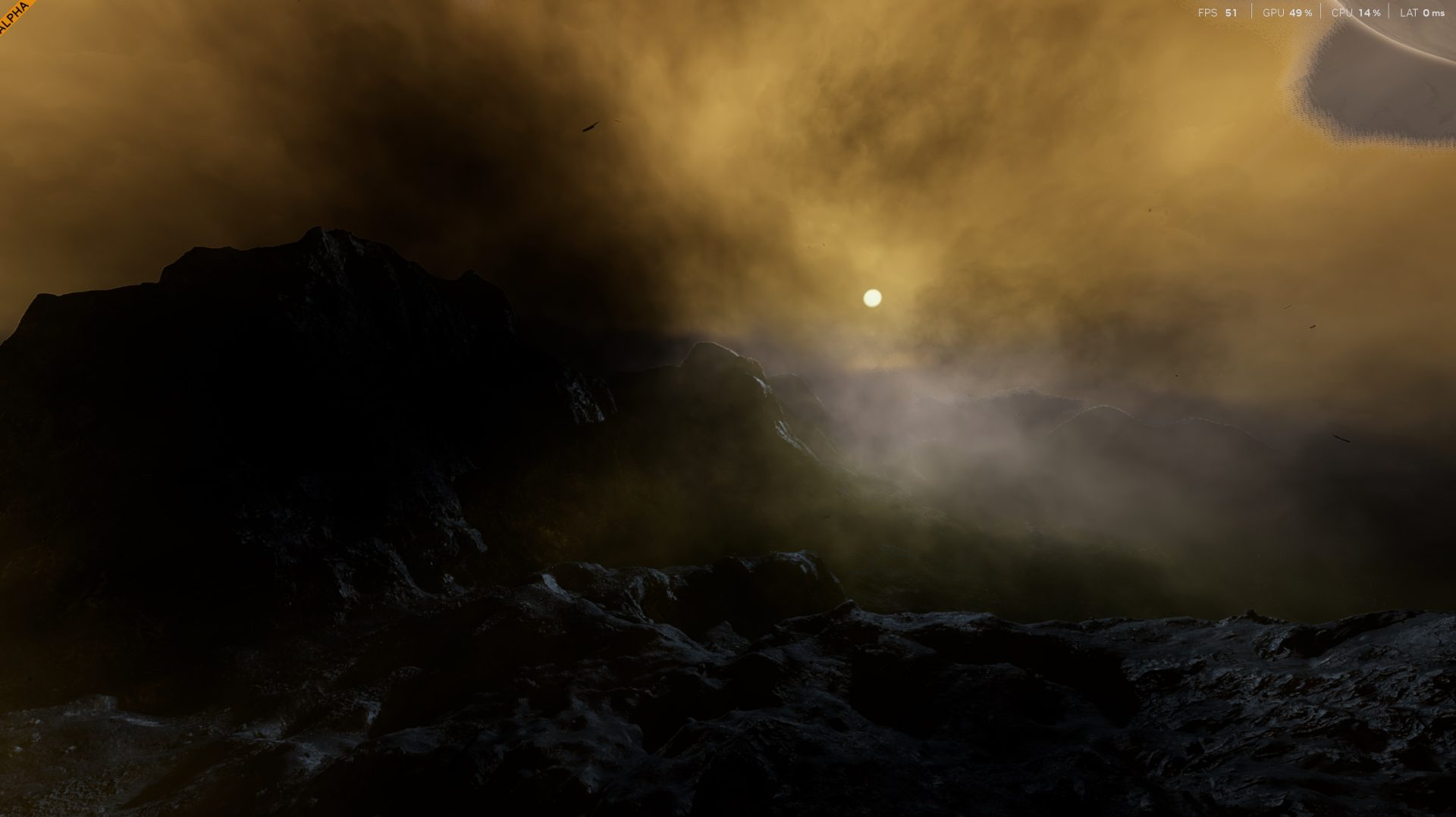
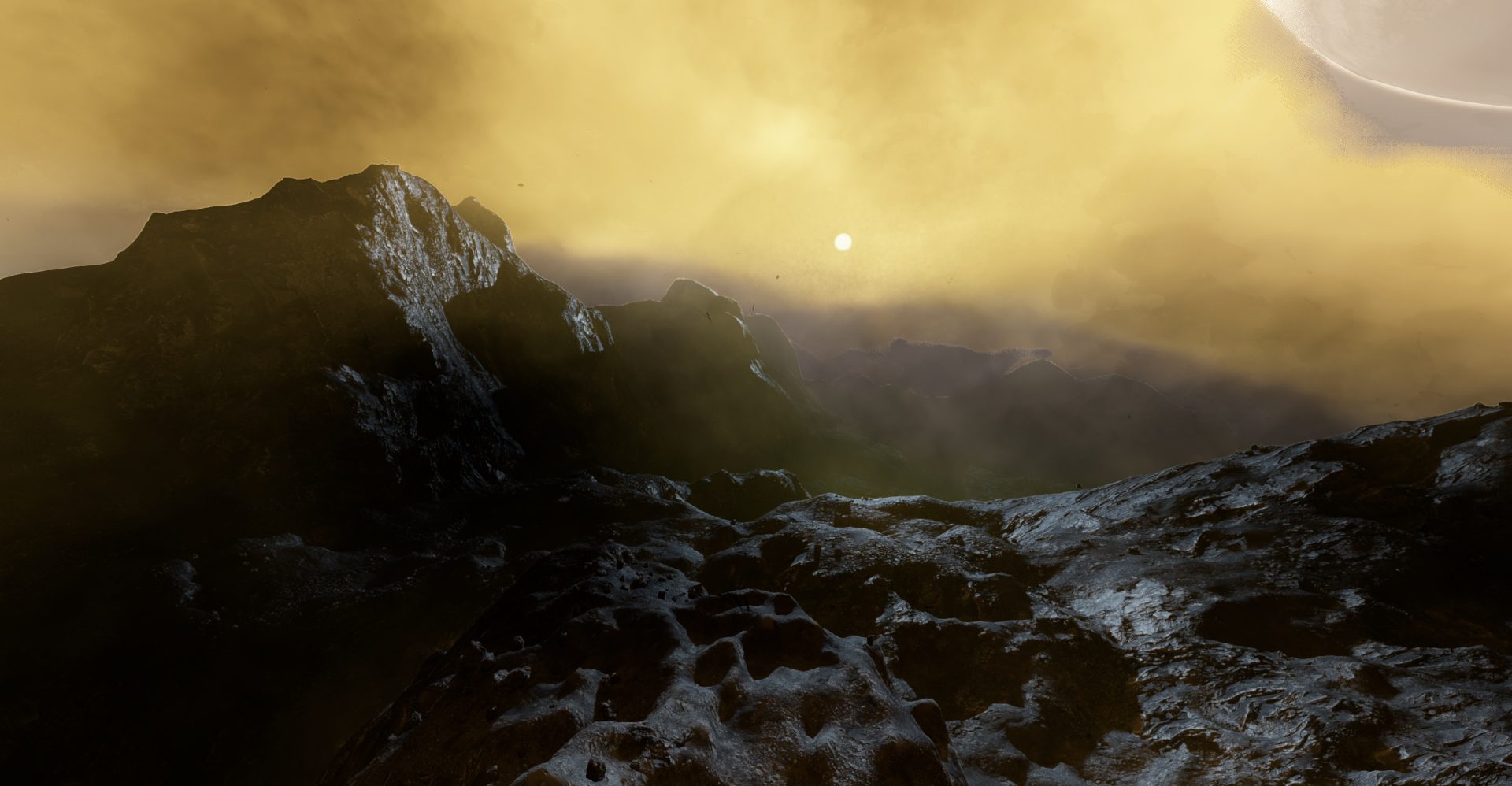
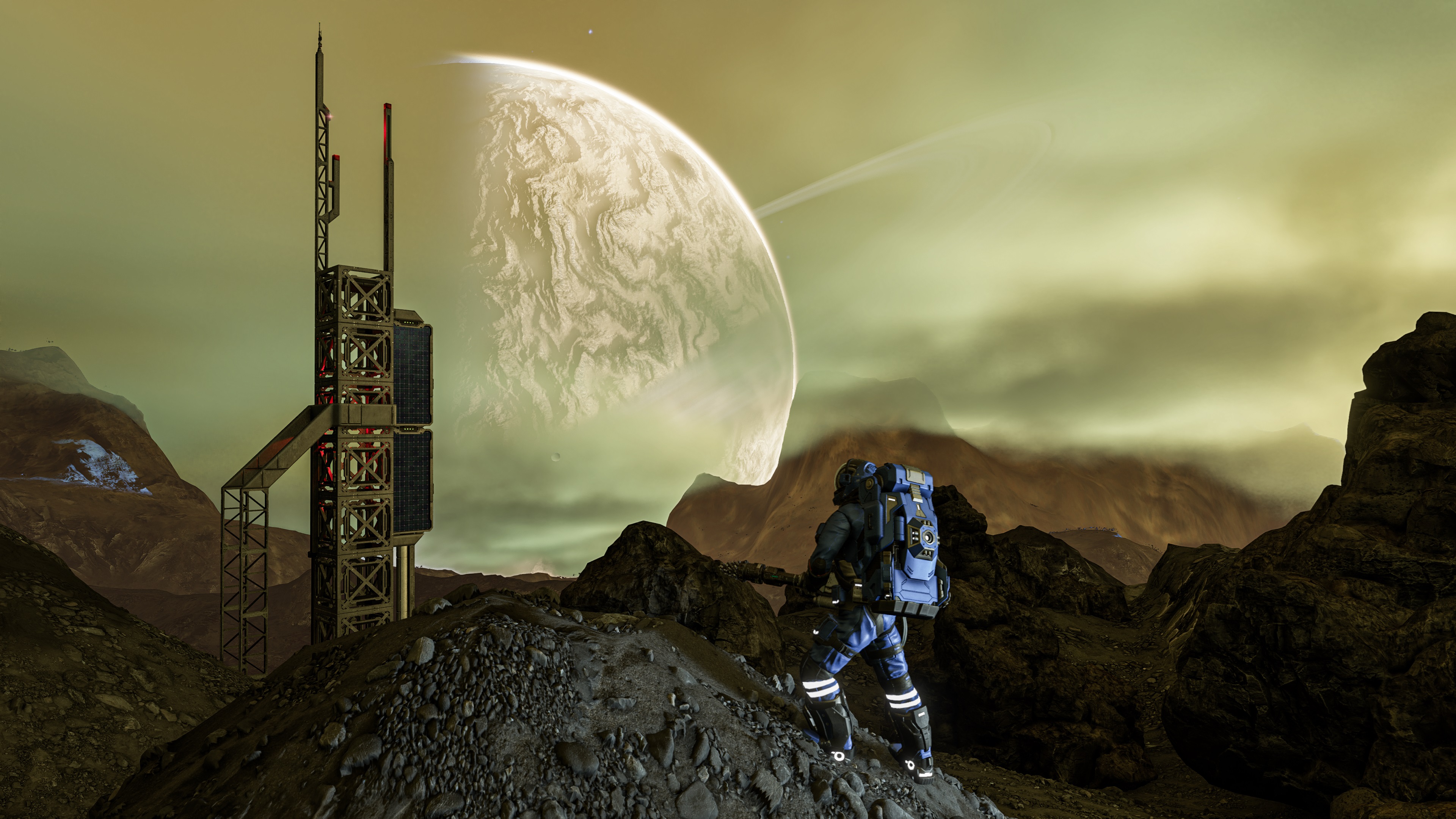
Caligo (ILS-93c-I) is a rugged, hostile moon in the vicinity of Kemik. With surface gravity at approximately 0.416g, its surface is defined by fractured highlands, sharp ridgelines, and heavy atmospheric haze that casts the terrain in amber tones. Light scatters unpredictably across its rock formations, giving the landscape a dramatic and sometimes disorienting character.
Unlike the stark vacuum of Palatine, Caligo possesses a thin, unstable atmosphere. Dust, fog, and dense cloud layers dominate the sky, reducing visibility and creating a constant sense of pressure. It is not a welcoming world – but for engineers seeking isolation, resources, or strategic positioning near Kemik, it offers new possibilities.
Asteroid Rings & Clusters
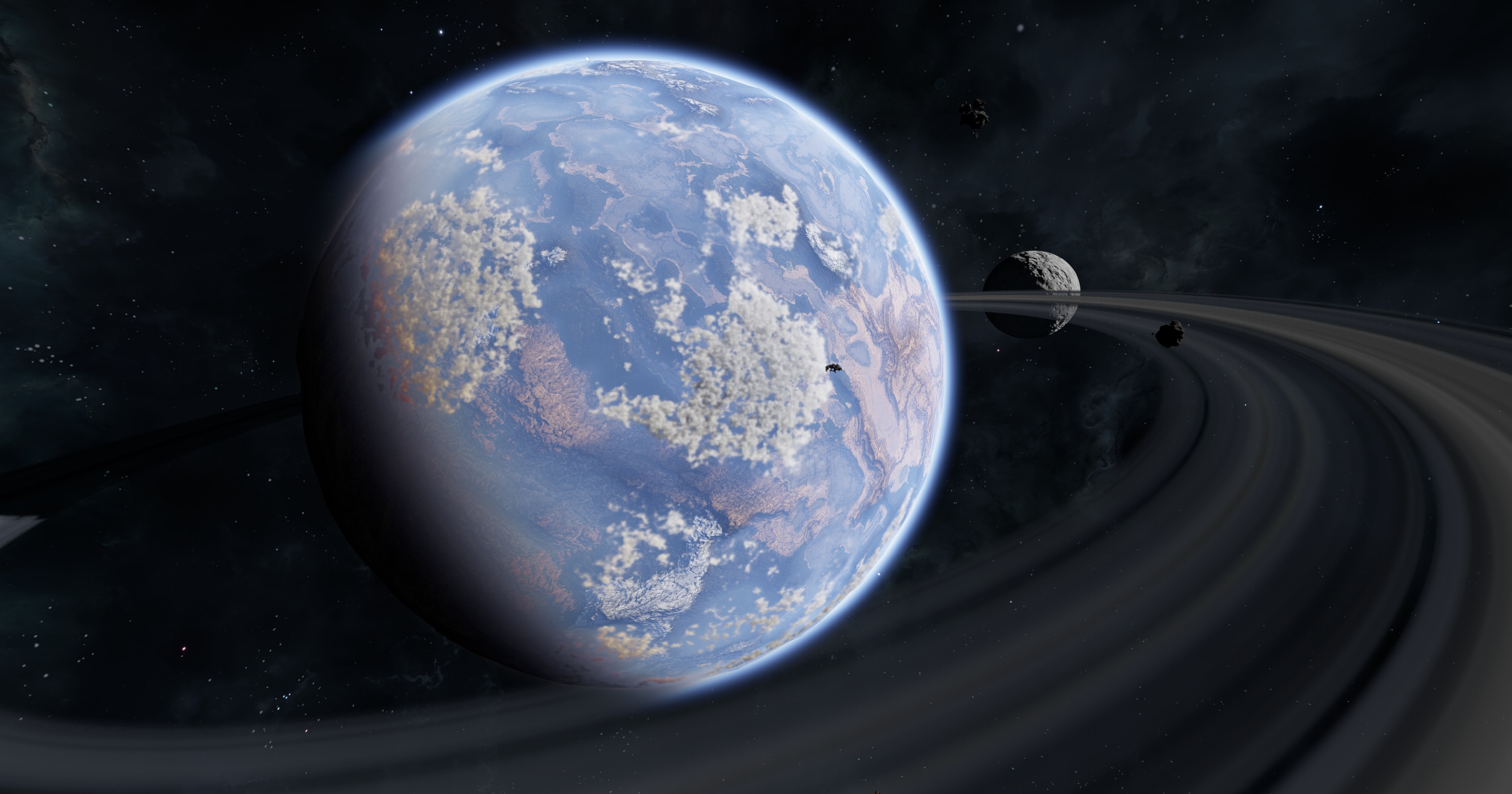
Asteroid Rings and Clusters expand the Almagest System with dense, resource-rich regions that reward exploration and risk-taking. These formations are fully discoverable – when you enter a new ring or cluster, its name is revealed, marking your discovery in the system. Beyond serving as striking orbital landmarks around planets like Verdure and Kemik, they introduce significantly higher asteroid density and distinct material distribution patterns across different field types.
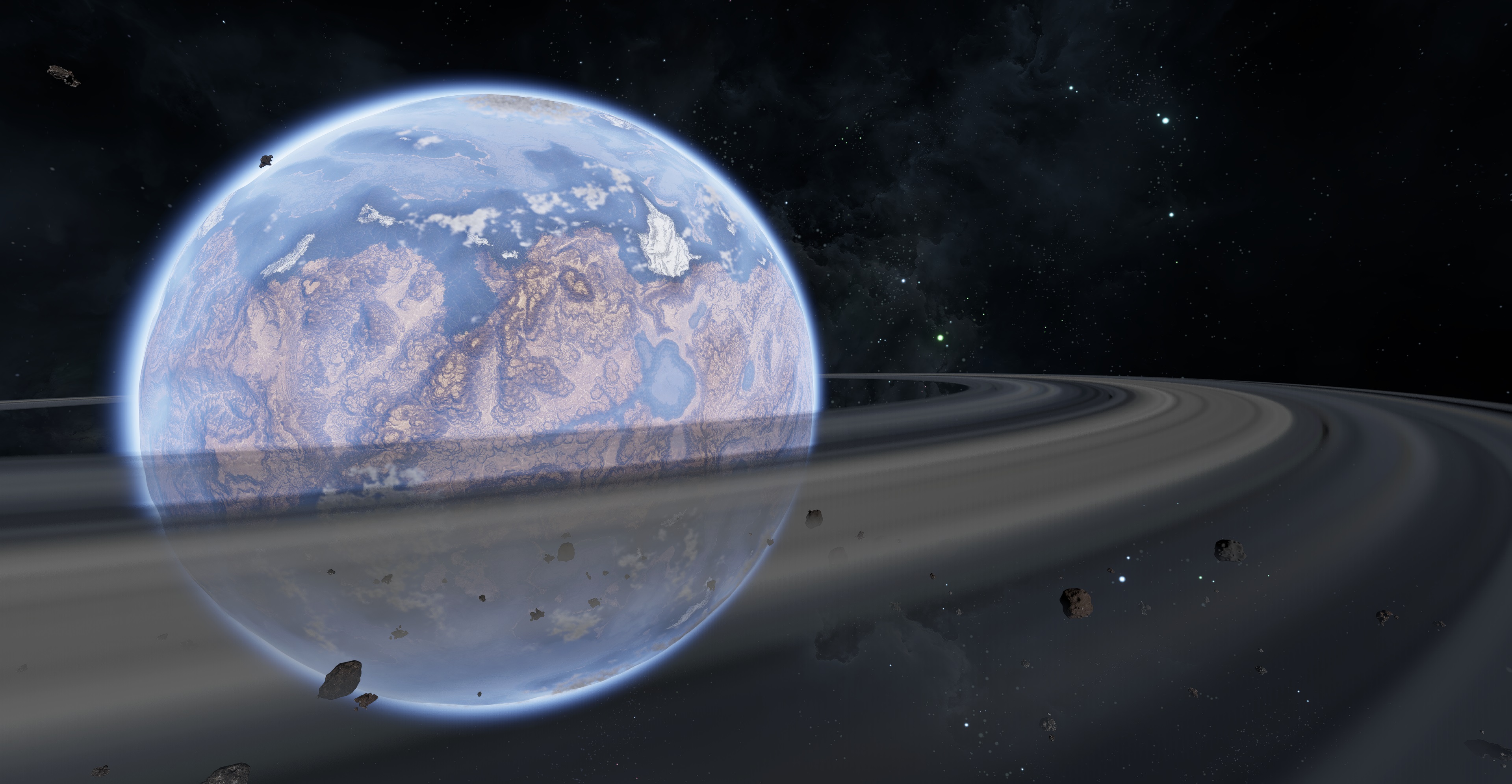
The Viridian Halo
The Viridian Halo is a dense asteroid ring encircling Verdure, rich in mineable resources and fully discoverable as you enter its orbit.
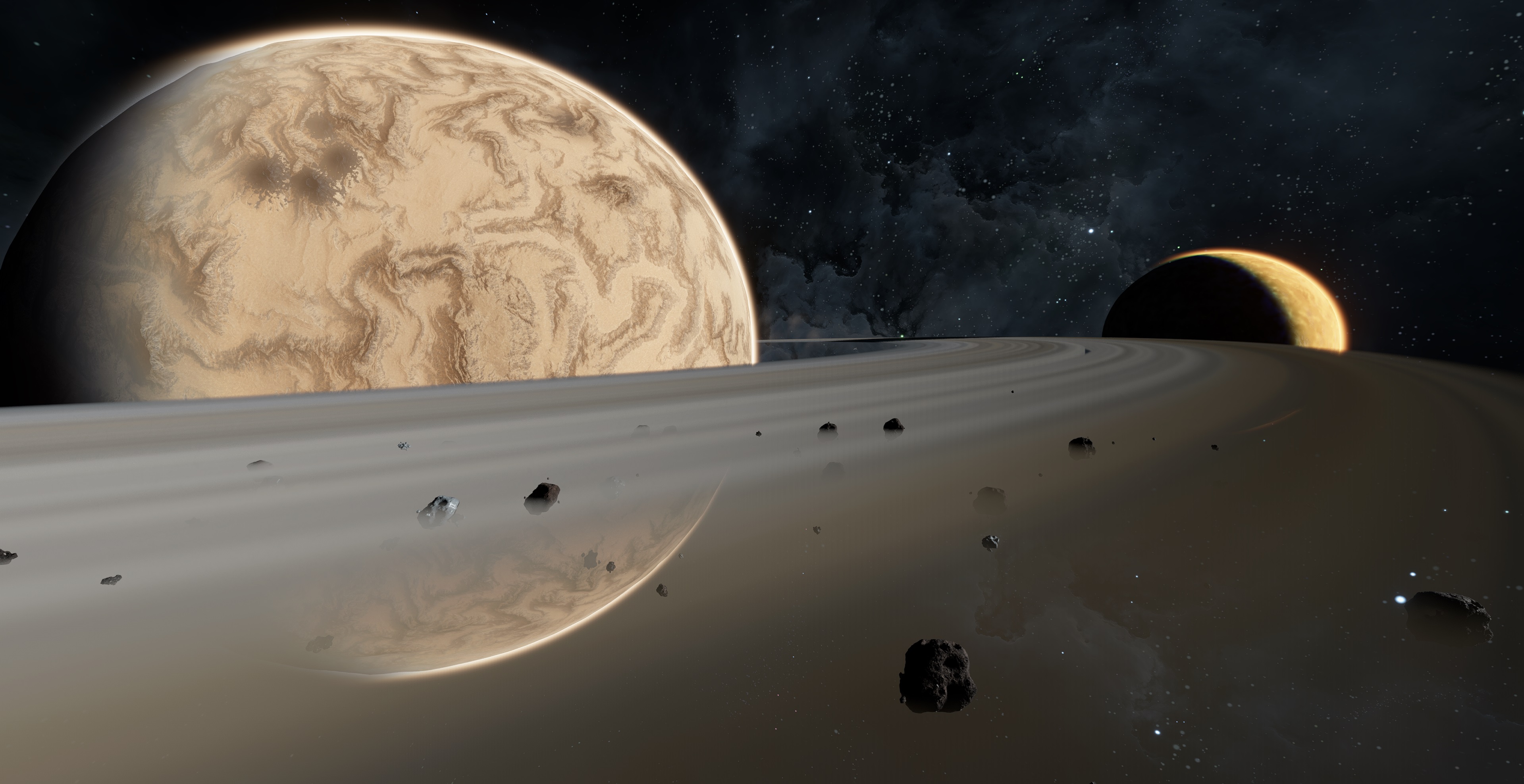
The Cryon Ring
And around Kemik, you can find the Cryon Ring – a colder, ice-rich asteroid belt with higher concentrations of frozen resources, making it a key location for harvesting ice in the Almagest System.
Asteroid Clusters
There are 3 types of Asteroid Fields in this update for you to discover:
- Feroid Fields (containing huge amounts of Iron)
- Ice Fields
- Radiant Drift (higher chance of uranium, platinum, titanium)
Right now you can discover major named clusters – they are not visible on map in VS2.2, but we are planning their visualization for map in a future update.
- Oblivara Cryoclastic Cluster
- Oblivara Ferric Drift
- Kemik Ferrum Reach
- Helionis Ferric Span
- Helionis Cryal Field
- Helionis Radiant Cluster
- Nadirae Cryonic Disk
- Nadirae Radine Reach
Delfos Killing Field
The Delfos Killing Field surrounds the brown dwarf at the heart of the Almagest system with a deadly environmental hazard that activates when you get too close. Heavy dust and fiery cloud effects engulf your ship, and the extreme conditions can damage or destroy grids if you don’t escape in time. Delfos is not a place to linger.
Expanded Contract System
The contract system has been expanded with new missions available in the Verdure sector. You can hop right into the fun stuff right away – but make sure you get yourself some weapons first! With the introduction of weapons, contracts now come with real danger – hostile defenses and automated threats can fight back while you attempt to complete your objective.
Contracts can now task you with objectives such as delivering key components, salvaging, or recovering resources from dangerous locations. Many missions require you to solve engineering challenges at scale, pushing you to build production chains, manufacture components, and transport large quantities of resources.
But at the same time you are free to solve these challenges your way: mine resources, salvage wrecks, manufacture components, trade through the economy, fight enemies, or loot valuable cargo.
This approach keeps the open-world sandbox spirit of Space Engineers while giving it new energy through the expanded scale and exciting possibilities enabled by our VRAGE3 engine. Together, these contracts deepen the survival experience by turning exploration, engineering, and resource management into meaningful progression across the system.
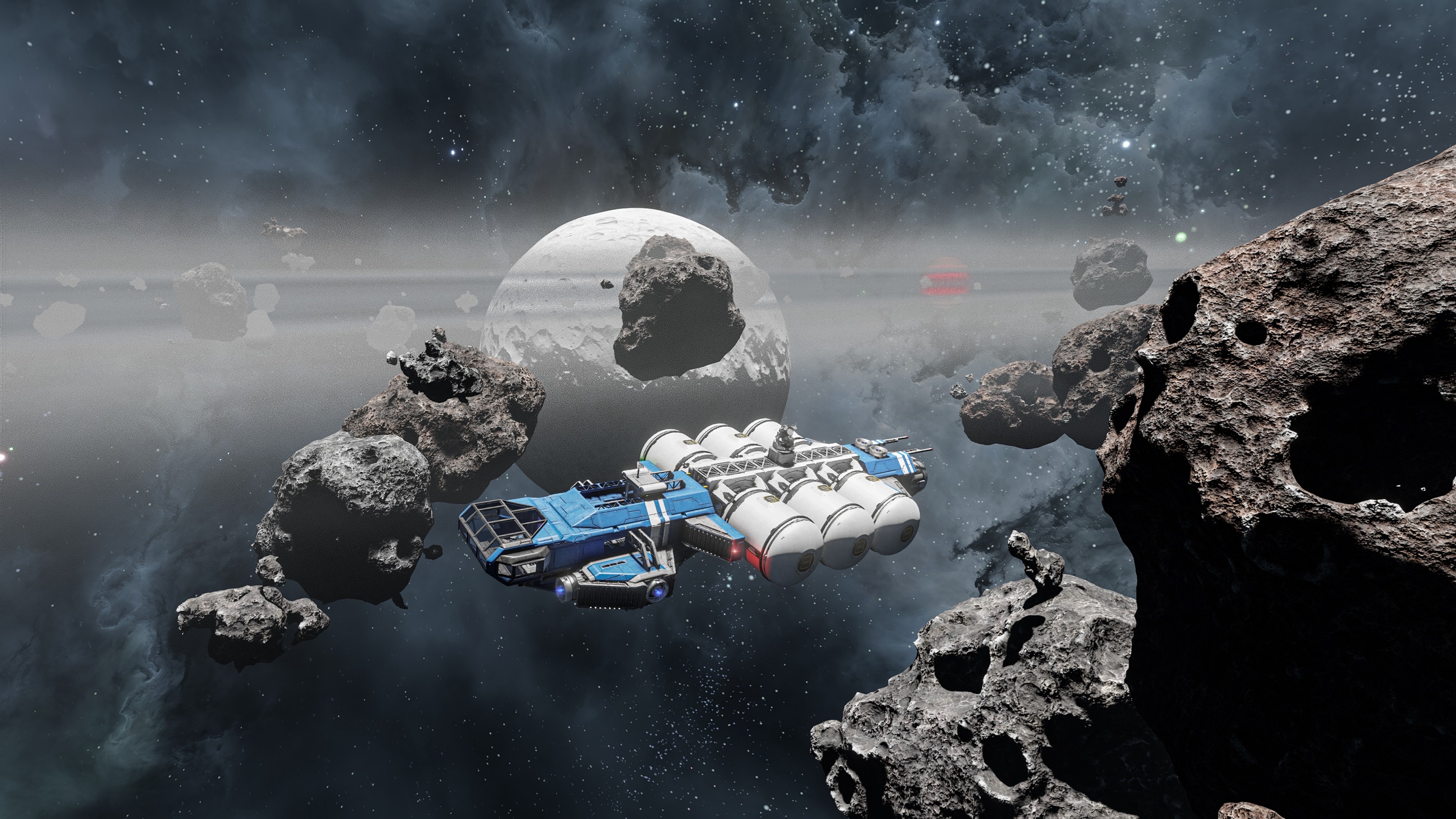

In VS2.2, we are introducing key systems that shape the future of gameplay in Space Engineers 2. Mechanical blocks, combat basics, economy systems, and new player tools are not just standalone features – they are core building blocks that upcoming updates will expand upon. Each system is designed to integrate into the larger vision, allowing us to iterate, deepen mechanics, and layer more complex gameplay over time.
Mechanical Blocks
Mechanical Blocks are here!
We are introducing the first Mechanical Blocks to Space Engineers 2 – Rotors and Pistons. Our main focus is improving the stability of pistons and rotors. We are completely reworking them from the ground up along with our new VRAGE3 engine running on top of the latest Havok physics engine. Starting with very basic movement functionality, we will continue expanding from there.
This is an important step toward more dynamic grids and moving constructions.
Large 1.25m & Small Rotor 0.5m
A mechanical block consisting of a fixed base and a detachable head. When powered, it allows continuous rotation around a single axis

Large 4m & Small Piston 2.5m
A mechanical block consisting of a fixed base and an extendable arm with a detachable head. When powered, it allows linear extension and retraction along a single axis.

Planetary Events
With VS2.2, we’re introducing the Planetary Events system, starting with weather as its first concrete event type. It’s a systemic layer meant to give planets more life and variation over time. For now, planetary events are designed to shape how planets feel and behave, rather than acting as a constant obstacle.
Wind is now part of the weather system. In VS2.2 it is visual only and does not push grids yet. All events are biome-driven and planet-specific.
Planetary Event types coming in VS2.2 are:
- Weather: Sandstorms
- Weather: Rain
- Meteor Showers
Rainstorm
Rain occurs on Verdure in water biomes. During rain, solar panel output is reduced.
Sandstorm
Sandstorms occur in desert biomes (and across Kemik). During a sandstorm, solar panel output is reduced.
Meteor Showers
Meteor showers can occur on Verdure (most commonly in wasteland biomes), Palatine, Caligo, and Kemik. They deal damage to grids (not voxels). In this first implementation they run at a low default frequency and do not target players or player grids – they are truly random.
Weapons & Combat Basics
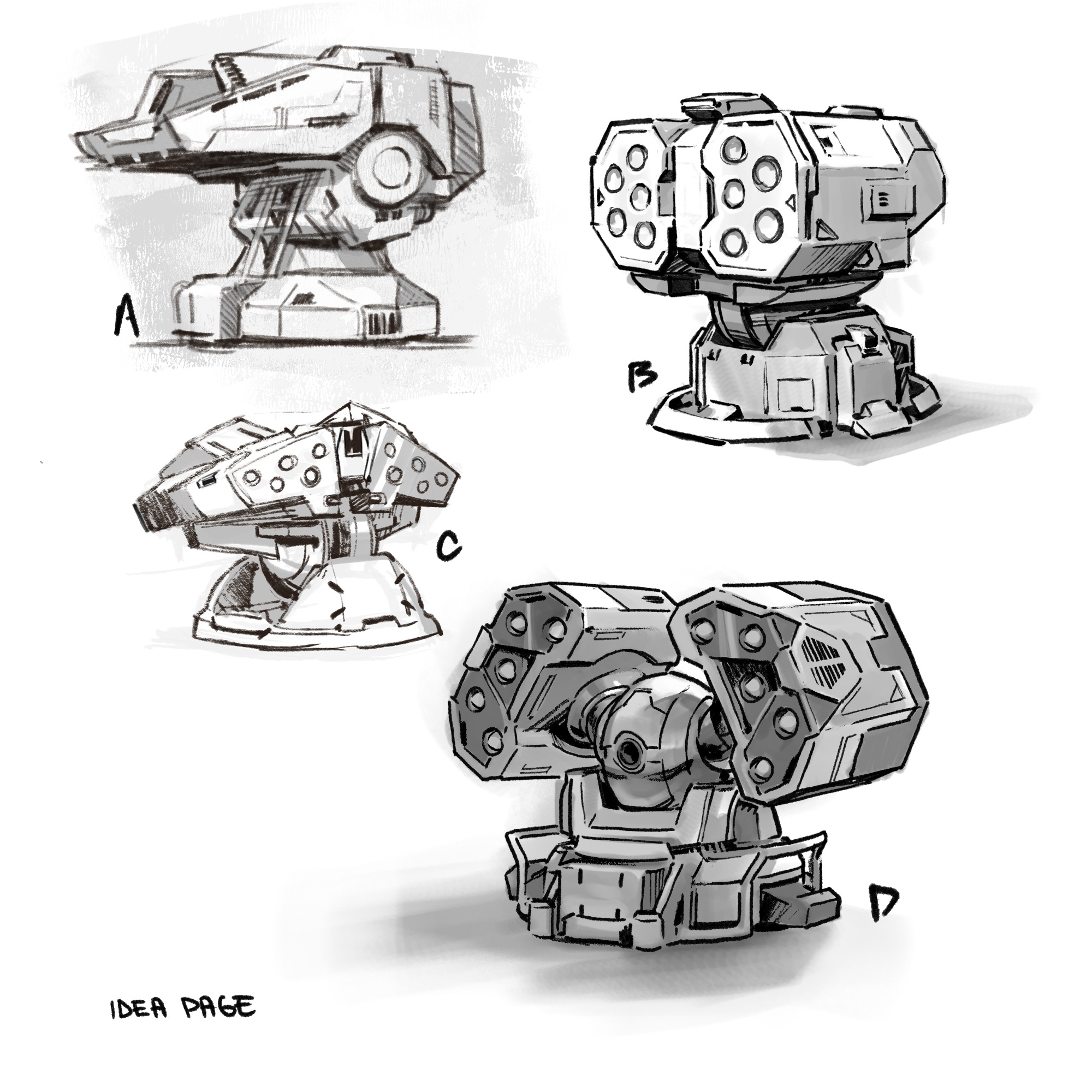
VS2.2 introduces the first implementation of Weapons and Turrets, along with new combat-related HUD elements. This is the starting point for combat in Space Engineers 2 – giving you the tools to arm your grids and characters while we continue expanding the system in future updates.
Turrets currently use a basic AI behavior, targeting random functional enemy blocks first and then armor blocks. They also target asteroids. This is just an initial implementation that establishes core combat mechanics and we will continue refining and expanding.
Grid Weapons: Gatling Gun
A rapid-fire weapon for defense against enemy grids and projectiles
- Max Firing Range – 800m
- Ammo Type – Gatling Ammo
- Magazine Capacity – 300
- Grid Damage – Medium
- Character Damage – High

Grid Weapons: Gatling Turret
A rapid-fire weapon with automated targeting for defense against enemy grids and projectiles.
- Max Firing Range – 800m
- Ammo Type – Gatling Ammo
- Magazine Capacity – 300
- Grid Damage – Medium
- Character Damage – High

Character Weapons: Assault Rifle
An automatic Iron Sight rifle
- Max Firing Range – 400m
- Ammo Type – Rifle Magazine
- Magazine Capacity – 30
- Grid Damage – Light
- Character Damage – Medium

Character Weapons: Rocket Launcher
A single barrel rocket launcher.
- Max Firing Range – 800m
- Ammo Type – Rockets
- Magazine Capacity – 1
- Grid Damage – High
- Character Damage – Very High

Ship Action Toolbar
This update introduces the Ship Action Toolbar system along with a new feature: Automatic Block Recovery. If a block referenced in a toolbar is destroyed and you rebuild the same block in its place, the toolbar will automatically reconnect to it. This makes repairing damaged ships much smoother during survival and combat situations.
For example, if a rotor referenced in a cockpit toolbar is destroyed, rebuilding that rotor will automatically reconnect it to the cockpit’s toolbar. However, if the cockpit itself is destroyed, its toolbar configuration is lost.
Copying a grid now preserves its saved toolbar actions as well. Grouping of systems for the grid toolbar is not supported yet, but it is planned for a future update as we continue developing the system.
Customizable Controls Basics
VS2.2 introduces a simple customizable controls screen as the first step toward a more flexible input system. This is just the beginning – we will continue expanding control customization in future updates.
You can now bind actions to special mouse buttons, numpad keys, key modifiers, and even set up multiple key combinations for a single action.
Survival Mechanics: Suit Oxygen
With VS2.2, we are introducing the first layer of survival mechanics through Suit Oxygen.
There is currently no pressurized environment or airtightness system. On Verdure, you can breathe normally thanks to its breathable atmosphere, but in space and on airless worlds you will need to manage your suit oxygen carefully.
Oxygen Bottles are consumable items produced in the Gearforge and require ice to manufacture. These bottles allow you to refill your suit oxygen while exploring away from your base.
Your suit oxygen can also be refilled directly at functional blocks such as the Oxygen Generator, Survival Kit, Medbay, and Cockpit. These blocks now support oxygen refilling and form the foundation for future life-support mechanics.
This system is the first step toward deeper survival gameplay in Space Engineers 2.
Economy Foundations: Trading, Credits
VS2.2 introduces the foundations of the in-game economy with Credits and basic Trading systems. This is the first step toward a larger economic layer that we will continue expanding in future updates.
You can now earn Credits through contracts, selling ores and components, and by discovering random loot. Trade Terminals located on stations allow you to buy and sell resources and components. This initial implementation establishes the core systems for currency, loot distribution, and station-based trading that future updates will expand and refine.
Trade Terminal
A block that allows trading on stations across the Almagest.

Cargo Ships
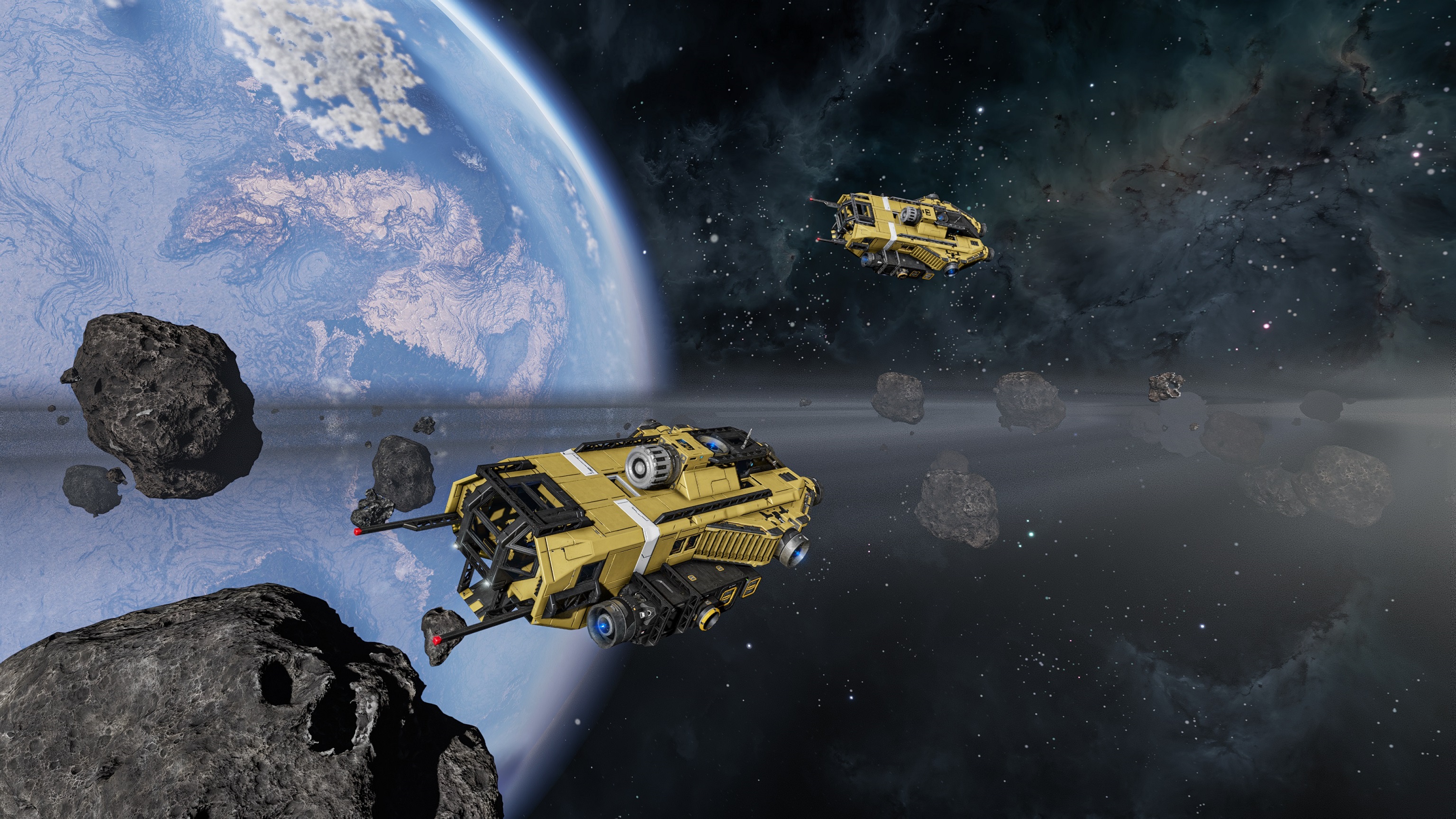
VS2.2 introduces the first iteration of Cargo Ships moving through the Almagest System. For now, they simulate traffic within the system, adding more activity and life to space. This is an early step toward more dynamic encounters, economic interactions, and mission-related gameplay in future updates.
Datapads
VS2.2 introduces the first Datapads scattered across the Almagest System. These contain short lore snippets that begin expanding the background of this new universe. This is just the beginning – much more story content will arrive as we expand the narrative layer and introduce the Almagest factions into the game.
Datapads can be found as drops from random encounters. There are 19 Datapads available in VS2.2. Discover and collect them all!


VS2.2 is not only about laying new foundations – it also expands and deepens the systems already in place. We are building on the cornerstones established in earlier vertical slices, adding more depth, more functionality, and new layers of interaction. These expansions strengthen existing mechanics and move them closer to the long-term vision for Space Engineers 2.
Area Welding & Grinding, Ship Tools
VS2.2 expands your building tools with Area Welding for both characters and ships. The Character Area Welder and Ship Welders allow you to repair and build multiple blocks at once, making large-scale construction faster and more efficient.
Ship Grinders now support area grinding, enabling you to dismantle structures more effectively.
With the Area Welder, you can reach even the most inaccessible nooks and crannies – no tight corner is out of reach!
Character Tool: Area Welder
The Mark 1 Area Welder allows you to weld and repair multiple blocks at the same time, taking required materials from your backpack.

Ship Tools: Large & Small Welder
Large and Small Welder blocks allow ships to weld multiple blocks at once using area welding. They pull required materials through the conveyor system, making large-scale construction and repairs significantly faster and more efficient.

Ship Tools: Large & Small Grinder
Large and Small Grinder blocks now support area grinding, enabling you to dismantle multiple blocks simultaneously. This makes salvaging ships and deconstructing structures quicker and more practical during survival gameplay.

Production Lines, Assembler Changes
In VS2.2 we are introducing a first iteration of “Production Lines” – the ability of production blocks to work together to produce complex multi-step recipes. When your production blocks are properly connected through the conveyor network, they can request other blocks to produce required intermediate products, if such products are not available in the inventory system.
We have also adjusted all the assembler recipes to require components made in the smelter and not just raw materials.
However, load sharing between multiple production blocks is not implemented yet. If you queue 500 components in one assembler, that single block will process the entire order. Splitting production across multiple blocks is a planned future feature.
Further production balancing and production chain adjustments are planned as we continue refining the system.
GPS Screen Enhancements
VS2.2 introduces an improved GPS Screen UI with expanded marker management tools. You can now add new markers directly from your clipboard, edit existing markers, group and ungroup them, sort markers by name or distance, and delete them more easily.
Marker management is also faster thanks to new hotkeys. You can use Ctrl + A to select all markers, Shift to multi-select, Del to delete selected markers, and R to quickly rename a marker. These improvements make navigation and organization across the Almagest System much smoother, especially as exploration continues to expand.
Decorative Blocks
Deck Panel
A Modular Panel that is ideal for floors or ceilings.

PCU Rebalance
We’ve adjusted PCU values across the board, allowing you to build more blocks and larger grids without negative performance impact!
Additional Improvements
- Contract Rewards & Randomized Loot
- Character Animations additions and improvements
- Separate Tool Sounds Volume Slider – because you asked for it!
- GUI & HUD Improvements
- Production screen
- Contracts UI
- Warfare HUD View
- Player HUD enhancements – O2
- Added tons of new sounds and audio improvements
- Added 9 Game Localizations
- Brazilian Portuguese
- Czech
- French
- German
- Italian
- Polish
- Slovak
- Spanish
- Turkish
There are many additional improvements and fixes in Vertical Slice 2.2 – you can explore everything included in the detailed Changelog.

We’ve updated the Space Engineers 2 Pioneer Edition with new exclusive content for our early supporters. This update adds 6 new music tracks from Karel Antonin, along with the winning tracks from our Music Competition.
As Space Engineers 2 continues to evolve, we’ll keep expanding the Pioneer Edition with additional behind-the-scenes materials and digital extras.
Buy Pioneer Edition now and help us build the next vertical slices faster!



VS2.2 lays the foundation for the automation systems of VS2.3, the water gameplay of VS3, and the multiplayer systems arriving in VS4. With the release of this update, we’re expanding our roadmap to give you a clearer look at what’s coming next for Space Engineers 2.
The next major milestone will be VS2.3 – in this update, you can expect Wheels, Hinges, Warheads, the Timer Block, Sensor Block, LCDs, Wind Turbines, the Event Controller, further combat improvements, and additional features expanding on the foundations established in our previous updates.
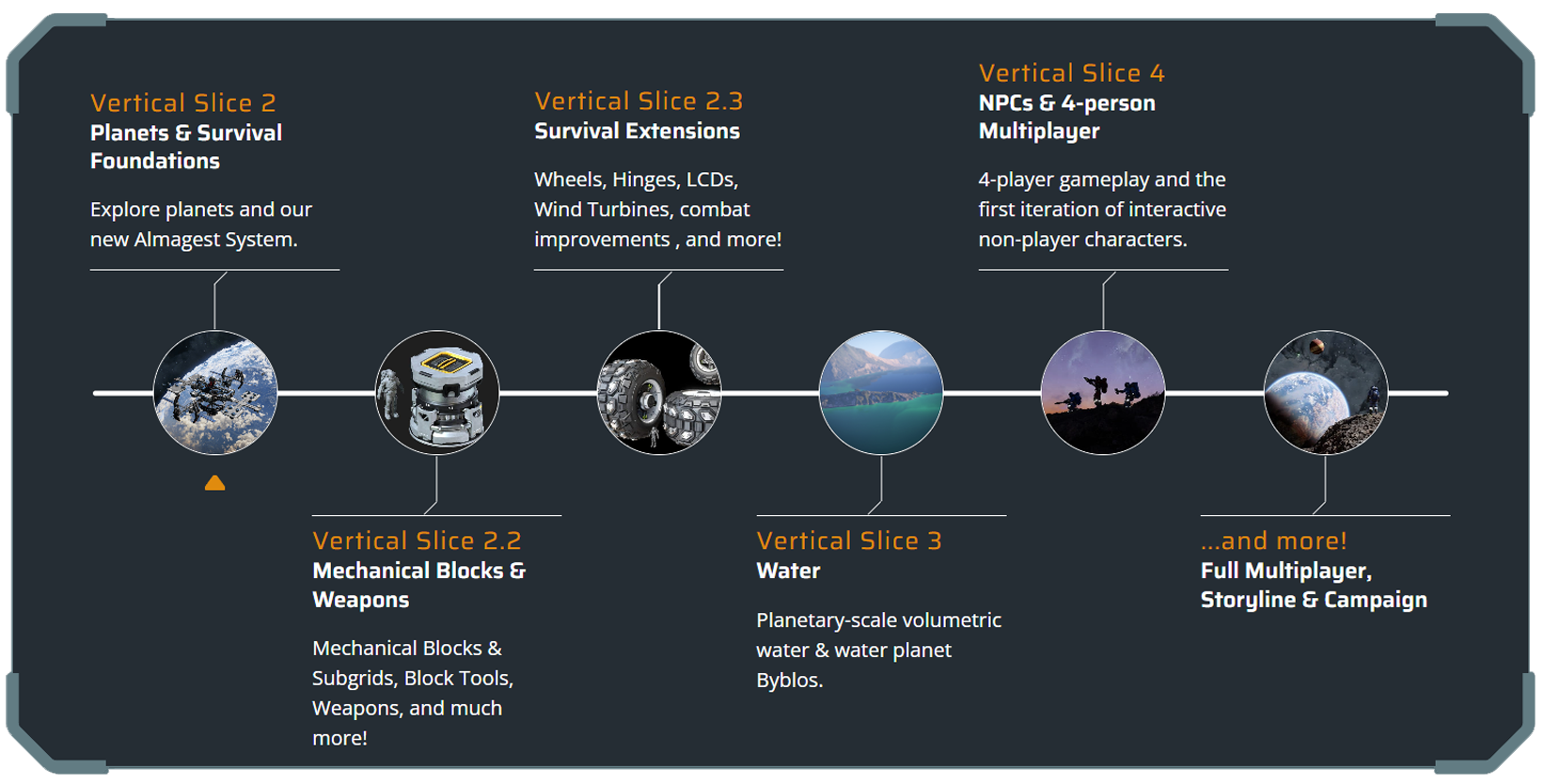
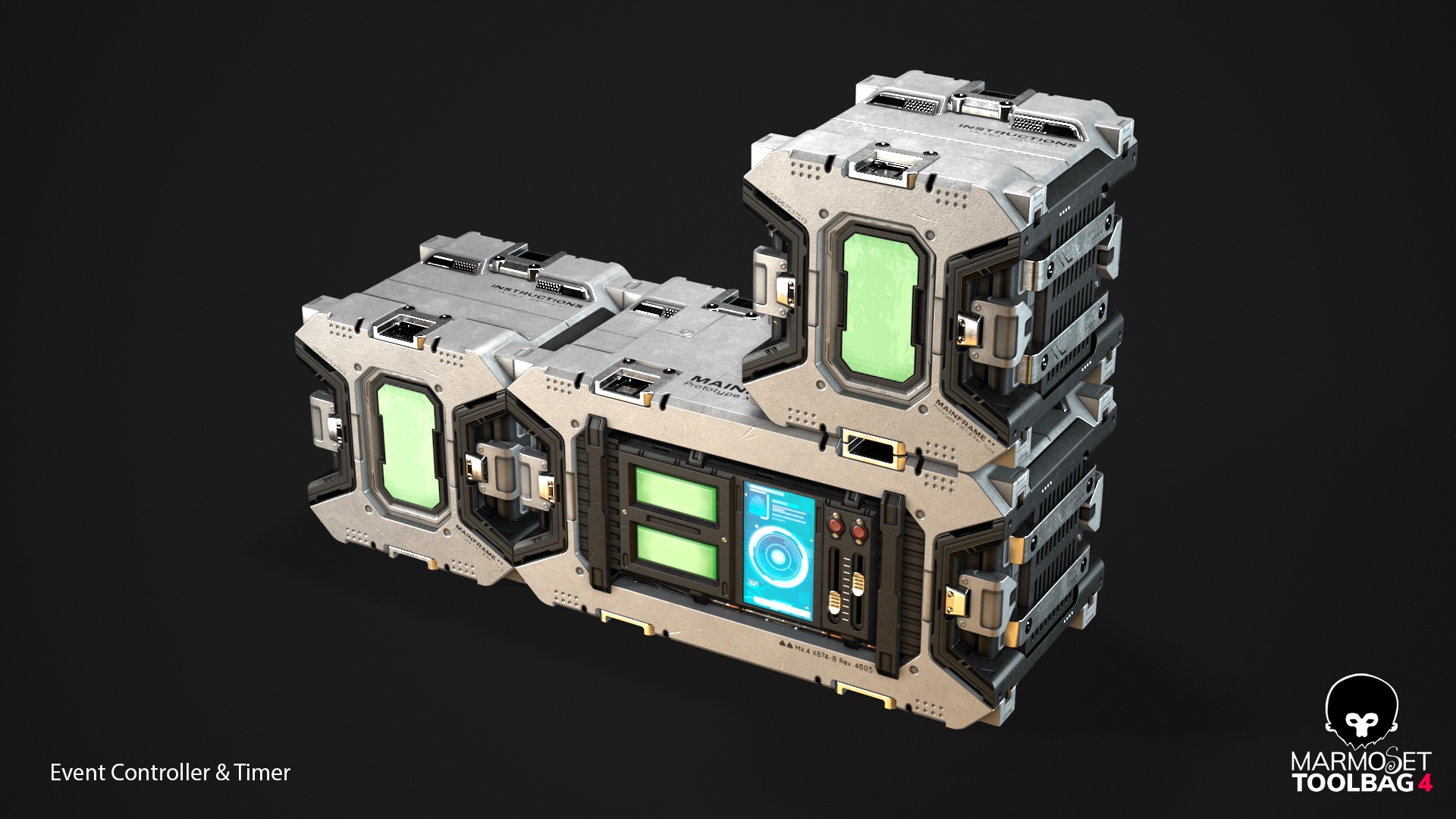
After that comes VS3: Water. Planetary-scale volumetric water, along with all the water gameplay systems and blocks. This update will also add a new water planet, Byblos, to the Almagest system.
Following closely will be VS4: NPCs + Cooperative Multiplayer, adding 4-player gameplay and the first iteration of interactive non-player characters. VS5: Full Multiplayer will complete the core multiplayer framework for large-scale sessions.
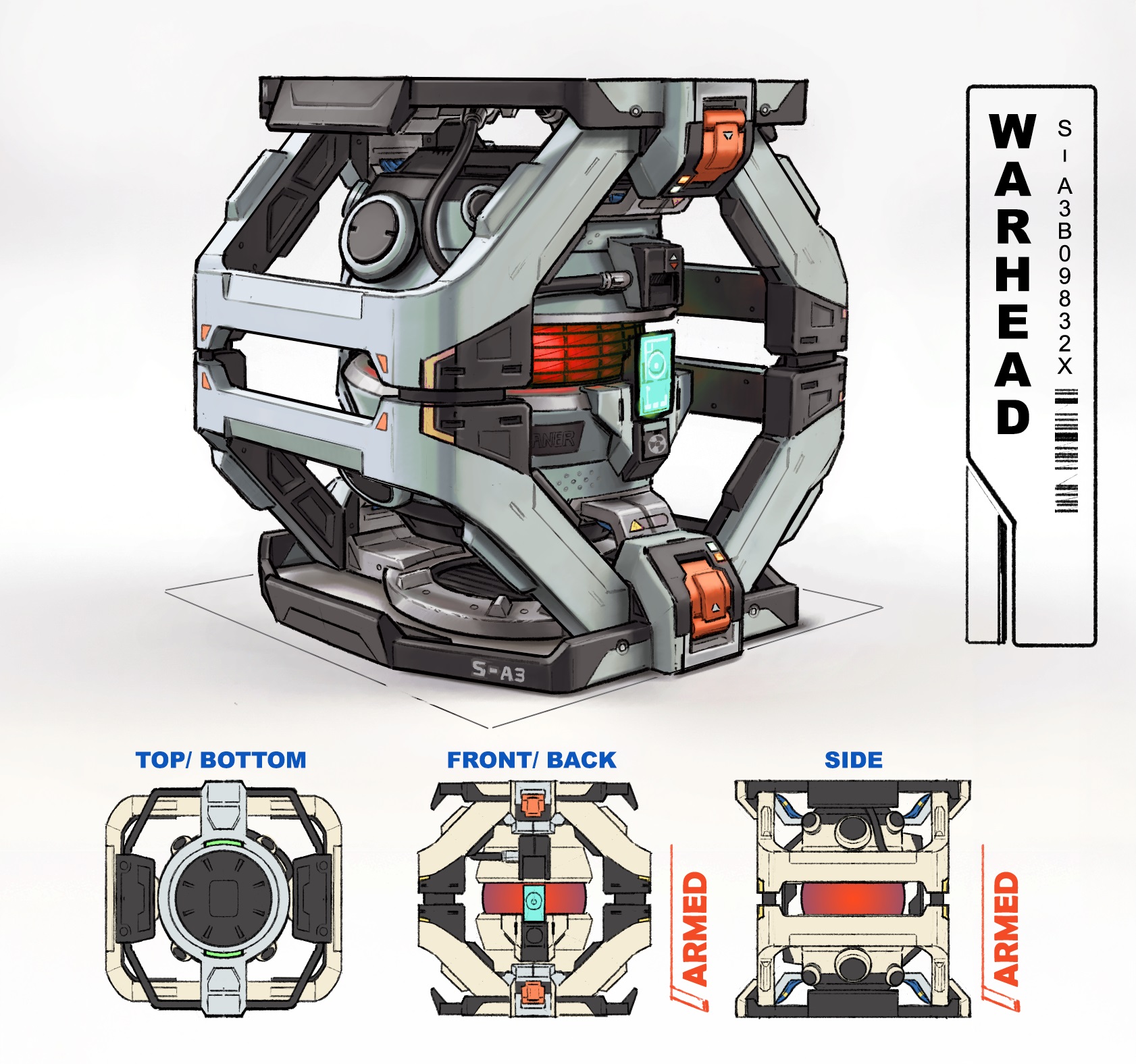
Two development teams are working in parallel on VS3 and VS4, so the final release order may depend on which reaches completion first. Either way, we’re pushing forward on all fronts to bring you new features and deeper gameplay as quickly as possible!
Many of the features and improvements planned for the future have been requested and shaped by the suggestions and ideas shared through our Support Portal. Your feedback is incredibly valuable, and we appreciate every suggestion you submit.
Check out our full Roadmap.

Please keep in mind that VS2.2 is still an Early Access and Alpha version of Space Engineers 2. We are planning daily hotfixes after the initial release.
- Some features of this update will need a new game to be started / Will need new save to be visible
- Money + Trading / Economy, Cargo Ships, Loot System, Asteroid rings & clusters, Moons, New Verdure Contracts
- Hinge Blocks, Subgrid Projection Support: Copy/pasting projections of blueprints with subgrids is not fully supported YET. You can build on pistons and rotors individually in VS2.2, but when you paste a grid that includes connectors, rotors, or pistons, only the main grid will be projected for now. We are definitely planning proper support for subgrid projections in a future update.
- Hinges are not included in VS2.2 – but we are not forgetting them. Hinges are planned for VS2.3, alongside Wheels and additional mechanical features that will further expand what you can build
- Iron Sight aiming for Character Weapons is planned
- Economy: Selling grids is not supported yet, but planned
- Rotor does not maintain its speed after reloading
- Tower made of Pistons behaves erratically when external forces are applied to it
- 3rd person view: Ship guns shoot exactly where they are oriented now (not where the crosshair is). It will be changed in VS2.3
- Planet modding is not fully supported at this stage of development – we will bring you modding support for planets at later stages!
- We are always keeping previous versions of the game available after major updates. This means you can return to an earlier version at any time and, for example, save your blueprints or creations. You will find these builds in the Steam Beta tab
- We also want to be upfront about one important thing. We already know that water will be such a monumental change for the game that you will need to start a new save when VS3 arrives. We try to minimize situations like this, but during the alpha stage of development they are sometimes unavoidable.
For full details, visit the full VS2.2 Changelog.

Q: No Wheels in VS2.2?
A: We were prototyping wheels for VS2.2, but they need more time to cook. They’re coming – just not in this update.
Q: What is the Economy/Trading Scope?
A: Trading in VS2.2 focuses on base resources and economy systems, not grid-to-grid trading yet. That layer will come later as we expand the system.
Q: What is Suit Oxygen feature?
A: VS2.2 introduces Suit O2 as another survival element. Pressurization and environmental oxygen systems are not included yet.
Q: Will we get support for Blueprint Projections with Subgrids?
A: Copy/pasting projections of blueprints with subgrids is not fully supported YET. You can build on pistons and rotors individually in VS2.2, but when you paste a grid that includes connectors, rotors, or pistons, only the main grid will be projected for now. We are definitely planning proper support for subgrid projections in a future update.
Q: Will we get Production Load Sharing?
A: Production lines are coming in VS2.2 – however, load sharing between multiple production blocks is not implemented yet. If you queue 500 components in one assembler, that single block will process the entire order. Splitting production across multiple blocks is a planned future feature.
Q: Will a New Save be Required to get the new features?
A: Some features introduced in VS2.2 require starting a new game to be visible/present: Credits & Trading, Cargo Ships, New Loot System, Asteroid Rings and Clusters, Moons.
Q: Where is feature/block “X” (Wheels, Hinge, Airtightness, etc.)?
A: We’d love to have them in the game right now too! Some features need more time and testing to reach the quality we aim for. You can check our updated roadmap for an overview of what’s coming next and when you can expect your favorite features to arrive.
Q: What about multiplayer?
A: Because multiplayer only works if the core systems are solid first. If we added MP now, you’d have multiplayer but no real gameplay to use it with – and we’d just rewrite everything later.
We’re starting with 4-player co-op because it’s easier to stabilize, and full MP will follow once the foundations are ready.
Q: And NPCs?
A: NPCs are planned for VS4, alongside the first multiplayer implementation. Development of NPCs is already in progress.
Q: Why does the Almagest system map have sectors you can’t access?
A: More sectors will be added in the future updates. We also plan to introduce new missions and new mission types in regular smaller updates in between big vertical slices.
Q: Will the sector resources differ in the future?
A: Yes, we plan to make resources more dispersed – not every resource will be available in every sector, encouraging exploration and trade between regions. Also the production chains are just a baseline tweaked especially for VS2 and you can expect more changes as the development progresses.
Q: Can planets be modded?
A: Planet modding is not fully supported at this stage of development – but do not worry, we will bring you modding support for planets in the future updates!
Q: Should I purchase Space Engineers 2 now?
A: If you’re excited about what’s already in the game and want to help shape its future, now is a great time to join. Buying early directly supports development and lets you influence the direction of SE2.
If you’ve been waiting for planets and the first foundations of survival to test and share feedback, this update is for you.
Every update adds more depth – and buying now directly supports development and gives you a voice in shaping SE2’s future.
You can also follow development through our weekly dev diaries, subscribe to our newsletter, and add the game to your Steam Wishlist.


How to share your feedback?
The best way to provide your feedback is through our Support Portal. You can always find a direct link to the support portal from within the game – just press F1 to access the help screen!
This platform is your direct line to the developers and the Space Engineers community. Here, you can:
- Create a Bugreport
- Create a ticket with your Feedback/Idea
- Vote on other ideas or bug reports
- Comment and Interact with fellow players
- Suggest solutions and provide valuable feedback to help shape the future of Space Engineers 2

🤩 Play Now on Steam: https://store.steampowered.com/app/1133870/Space_Engineers_2/
🛠️ Feedback & Support – https://support.keenswh.com/
🗺️ Roadmap: https://2.spaceengineersgame.com/roadmap-2/#current
🛰️ Discord: https://discord.gg/keenswh
📫 Newsletter: https://www.keenswh.com/newsletter
➡️ Connect and find us on your platform of choice – https://www.keenswh.com/connect/

I would like to know if there is any chance that you could set up the camera to transmit images in real time to the LCDs.
So excited for keybinds finally. BUT They dont work. I set movement to my arrow keys. Enter the game, press the UP arrow, and the player looks at his feet! Wondering if anyone bothered checking this? Added a support ticket, but wondering how many more months this will take to fix?
Hello Marek,
This is a great update and I’m incredibly excited by the creative direction and progress of SE2. I fully believe in Keen’s vision of blending creativity and engineering with narrative, immersion, simulation and a sense of progress.
As new vertical slices add further features to the immersion, simulation and narrative elements of the alpha, I would be really interested to hear more from you and the team regarding your north star vision and philosophy specifically for the building experience within the game, and what the roadmap next has in store for delivering this.
Reflecting on this as a “builder” player type (~2500hrs in SE1, almost entirely spent designing grids), could I please offer my top-level “WISHES”, and see if they align?
1. ACCESSIBLE: (For any new player to the SE franchise) We should be able to pick up the fundamentals of creating shapes quickly
2. QUICK: We should be able to get from an idea to a creation via the shortest, quickest path possible
3. LIMITLESS: As far as is practically possible, our immersion should not be constrained in scale (size, detail and number of concurrent grids) by the technical limitations of the game engine
4. FUN: Designing and building should be entertaining in itself, and lock us in “the zone”; not be a chore
5. REALISATION: Our creations should be as close as possible to what we can imagine
For example, armour blocks are the most fundamental asset at our disposal for bringing our creations to life. It has been amazing to play with “small” and “large” grids cohesively – they offer a tantalizing promise of detail at scale. However, I’m finding them a bit limited by the “small vs large” binary that is a legacy of SE1. I would love to see this expanded to match the overall scope and ambition of SE2. Alongside this, I would love the block building experience to be as intuitive and friction-free as possible.
On the feedback channels, I’ve not been particularly sold by suggestions from some other players about a million different block shapes, or some kind of magical shape creation system – I think it’s good to have limitations and constraints from a creativity perspective (in this case, a finite and manageable set of “vanilla” parts), let alone a technical one. Instead, I think a simple (and consistent) set of rules will allow a huge range of emergent forms. And for everything else of course, there’s the workshop.
I realise that with each vertical slice, new block type and player creation upload, the current design patterns are getting more engrained. In which case, perhaps this is too late – but whilst still in Alpha, I would be really appreciative if you would consider the following design principles, for sake of maximum long-term creative potential:
1. All core armour blocks should be accessible from a single hotbar (slots 0-9)
2. Each slot in the hotbar should represent a logical and intuitive subset of armour blocks
3. The hotkey for switching between block shapes should be different to the hotkey for switching between block sizes (a pattern that can be applied to other blocks, such as thrusters types vs sizes)
4. Ideally, “Light” and “heavy” armour should be switched by a third hotkey
5. There would be four block sizes: tiny (~greeble), small, medium and large (~corridor)
6. Each block size should include the same fundamental shapes – including the very smallest
7. Each block size should be double the size of the previous block (whilst at the moment small=large/5; detail=large/10)
Many of these ideas I outlined in an “under consideration” feedback submission previously, which remains in the Top 15 upvoted posts (although it is somewhat out of date now):
https://support.keenswh.com/spaceengineers2/pc/topic/45896-add-medium-size-armor-blocks-1-25m-to-reduce-pcu-count-and-hotbar-bloat
To recap and update these ideas, I can try and tie them back to the above “wishes” and the most recent builds:
– PCU count vs detail: With only two block sizes, adding detail can mean 100s of additional PCU per 2.5 x 2.5m volume. At scale, detail is simply not viable, especially for high NPC traffic or multiplayer in-game scenarios. With 4 sizes of block, the equivalent detail could often be cut to ~8-32pcu per equivalent volume, enabling the wish “LIMITLESS”
– Time cost vs detail: using small blocks to fill large areas is a tedious process. With 4 sizes of block we can create new shapes much faster – allowing the wishes “QUICK” and “FUN”
– Different hotkeys for size and shape: A single hotkey means a lot of time with unnecessary cycling through shapes AND sizes. Two hotkeys would support the wishes “QUICK” and “FUN”
– Unite detail blocks with armour blocks: Currently Detail Blocks require an additional hotbar slot and also prevents us from making more varied smaller forms. Combining them consistently with the other sizes and allowing the same shapes helps enable wishes “QUICK” and “REALISATION”
– Multiplying Scale: The current size multiples of armour blocks (0.25m/0.5m/2.5m, or 1x/2x/10x) causes awkward combinations and many pcu-consuming filler blocks, especially when using large half-blocks. If the sizes were 0.3m/0.6m/1.2m/2.4m (1x/2x/4x/8x) then they would more naturally complement and nest within each other. If “tiny” blocks could additionally use the full armour shape catalogue, then half-sized tiny blocks would support 0.15m thicknesses – great for immersive detail at the fingertip scale – allowing “FUN” and “REALISATION”
Thank you for taking the time to read this feedback – I hope some of these notes may be useful.Thank you also for the 1000s of hours of entertainment you have given me and this community so far. I look forward to many more hours enjoying what you folks do.
All the best!